Zuojiang Huashan Rock Art Cultural Landscape, inscribed as a UNESCO World Heritage site in 2016 along the winding banks of the Zuojiang River in Guangxi Zhuang Autonomous Region (22°15’N, 107°01’E), stands as one of the most enigmatic archaeological treasures in all of East Asia. Spanning 105 kilometers of towering limestone cliffs, this extraordinary assemblage of more than 4,000 painted figures represents the largest single-area painted rock art complex on Earth — a silent, vivid gallery left behind by the ancient Luo Yue people between the 5th century BCE and the 2nd century CE.
🎨 The Crimson Palette That Defied the Ages
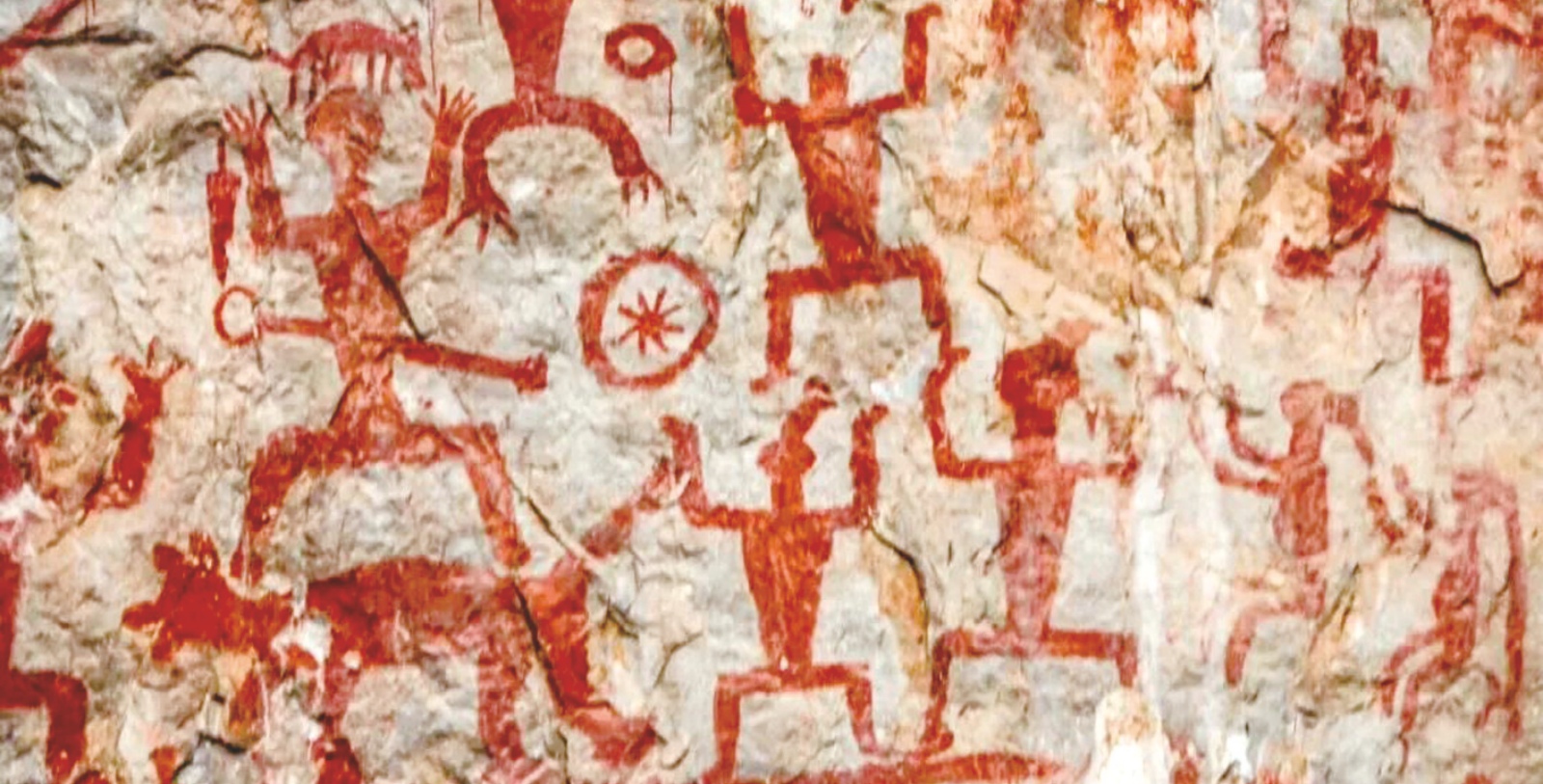
What makes the Huashan rock art truly astonishing is the deep red pigment that has endured for more than two millennia in a subtropical climate of relentless humidity and monsoon rains. The ancient Luo Yue artists created their paint from a mixture of hematite (iron oxide) and a mysterious organic binder whose exact formula remains a subject of intense scholarly debate. The color — a striking, rust-red hue — stands in dramatic contrast against the gray limestone cliffs, visible from great distances as boats approach the river bends. Even today, after 2,000 years of exposure to wind, rain, and scorching sun, the pigment retains an intensity that feels almost freshly applied.
🕺 The Enigmatic “Squatting Figures”
The dominant motif across all 38 rock art sites is the squatting human figure — a stylized silhouette with arms raised and knees bent, depicted in profile. Around each large, front-facing central figure — believed to represent a shaman or priest-king — dozens of smaller human figures dance and gesture, as if frozen mid-ritual. The uniformity of this posture across more than 100 kilometers of river valley suggests a highly codified religious or ceremonial tradition, one that was passed down through generations with remarkable consistency. Local Zhuang people have long called these cliffs “岜莱” (Ba Lai) — “the painted mountain.”
🏔️ Dunhuang on the Cliffs
Chinese scholars have nicknamed this site “断崖上的敦煌” (Dunhuang on the Cliffs) for its sheer scale and artistic significance. While Dunhuang’s Mogao Caves hold painted Buddhist murals within man-made grottoes, the Huashan rock art is painted directly onto the vertical faces of natural limestone precipices — some reaching 270 meters in height, with figures positioned 15 to 90 meters above the river. The largest single panel, at the Huashan cliff in Ningming County, covers more than 8,000 square meters of rock face. Viewing these paintings requires approaching by boat, gliding silently along the jade-green waters of the Mingjiang River as the red figures emerge from the towering stone walls above.
🛶 The Ritual Landscape of River and Cliff
The placement of the rock art was not accidental. The Luo Yue people deliberately chose cliff faces at river bends, where the water flows slowly and flat terraces on the opposite bank could accommodate crowds of participants. This created a closed, sacred ritual space — a natural amphitheater where the boundary between the earthly and the spiritual dissolved. The bronze drums depicted in many panels connect this art directly to the region’s ancient bronze drum culture, which remains a living tradition among the Zhuang people to this day. The figures, the drums, the cliffs, and the river together formed an integrated cultural landscape where ceremony, art, and geography became inseparable.
🔐 Unsolved Mysteries of the Red Ochre
Despite decades of archaeological study, the Zuojiang Huashan rock art guards its secrets tenaciously. How did the Luo Yue artists scale near-vertical cliffs without modern equipment? What was the binding agent that allowed the pigment to survive for two millennia? And what exactly do the figures represent — fertility rites, ancestor worship, or shamanic journeys to the spirit world? The squatting posture and raised arms bear striking resemblance to ancient bronze drum rituals still practiced in parts of Southeast Asia, hinting at connections between this remote river valley and a wider Austronesian cultural sphere that once stretched across the region.
🌿 A Cultural Landscape Protected for Future Generations
Designated as Guangxi’s first World Heritage site and China’s 49th, the property covers 6,621 hectares of river valley divided into three protected zones across Ningming, Longzhou, Jiangzhou, and Fusui counties. In 2018, the city of Chongzuo enacted specific protection regulations for the site. Visitors typically approach by boat from Ningming County, cruising the emerald waters while gazing up at the enigmatic red figures watching silently from the cliffs above. The best viewing season runs from October to April, when the subtropical heat relents and the river lies calm beneath the painted mountains.