The Grand Canal (大运河), inscribed as a UNESCO World Heritage site in 2014, is the longest and oldest artificial waterway on the planet — an engineering achievement that rivals the Great Wall in ambition and surpasses it in practical impact. Stretching nearly 2,000 kilometers from Beijing in the north to Hangzhou in the south, the canal system weaves together five major river basins — the Hai, Yellow, Huai, Yangtze, and Qiantang — and encompasses 27 individual sections of canal and 58 heritage sites that together tell the story of how China bound itself together through water.
🌊 A River Built by Human Hands
The earliest sections of the Grand Canal date back more than 2,500 years to the Spring and Autumn period (771–476 BCE), but the canal system as a unified project was the vision of Emperor Yang of the Sui dynasty (581–618 CE). Between 605 and 611 CE, millions of laborers were conscripted to construct the canal’s central sections, linking the fertile rice-producing regions of the south with the political and military capitals of the north. This was not merely a transportation project — it was a statement of national unity, a deliberate effort to bind the empire together through a network of waterways that would carry grain, soldiers, and ideas across the vast Chinese landscape.
🏗️ The Greatest Pre-Industrial Hydraulic Project
To call the Grand Canal an “engineering marvel” is not hyperbole. The canal builders overcame challenges that would have daunted any pre-industrial civilization: bridging the elevation differences between river systems, controlling water flow across flood-prone plains, and constructing locks that could raise and lower boats by as much as 40 meters. The invention and refinement of the pound lock — a chamber that adjusts water levels to move boats between different elevations — occurred along the Grand Canal centuries before similar technology appeared in Europe. The canal’s sophisticated water management system, including reservoirs, sluice gates, and drainage channels, represents the pinnacle of pre-modern hydraulic engineering.
🍚 The Grain Road That Fed an Empire
The primary purpose of the Grand Canal for much of its history was the transportation of grain tribute (漕运) — the annual shipment of millions of bushels of rice from the Yangtze River delta to feed the imperial court, the bureaucracy, and the northern armies garrisoned along the Great Wall. At its peak during the Ming and Qing dynasties, the canal carried more than 400,000 tons of grain annually, along with silk, tea, ceramics, timber, and every other commodity that sustained the imperial economy. The canal towns that grew up along its banks — Suzhou, Yangzhou, Hangzhou, Linqing, and dozens of others — became some of the wealthiest and most culturally sophisticated cities in pre-modern China.
🏘️ Cities Built on Water
The Grand Canal was not merely a transportation corridor — it was the backbone of China’s urban civilization for over a thousand years. Yangzhou, where the canal meets the Yangtze River, was for centuries the richest city in China, its merchants trading salt and silk for the luxuries of the entire world. Suzhou earned the nickname “Venice of the East” for its network of canals and gardens. Hangzhou, the canal’s southern terminus, so enchanted Marco Polo that he declared it “the finest and most splendid city in the world.” The canal shaped the urban culture of eastern China, giving rise to distinctive traditions of cuisine, architecture, literature, and art that bear its imprint to this day.
🌉 A Living Waterway
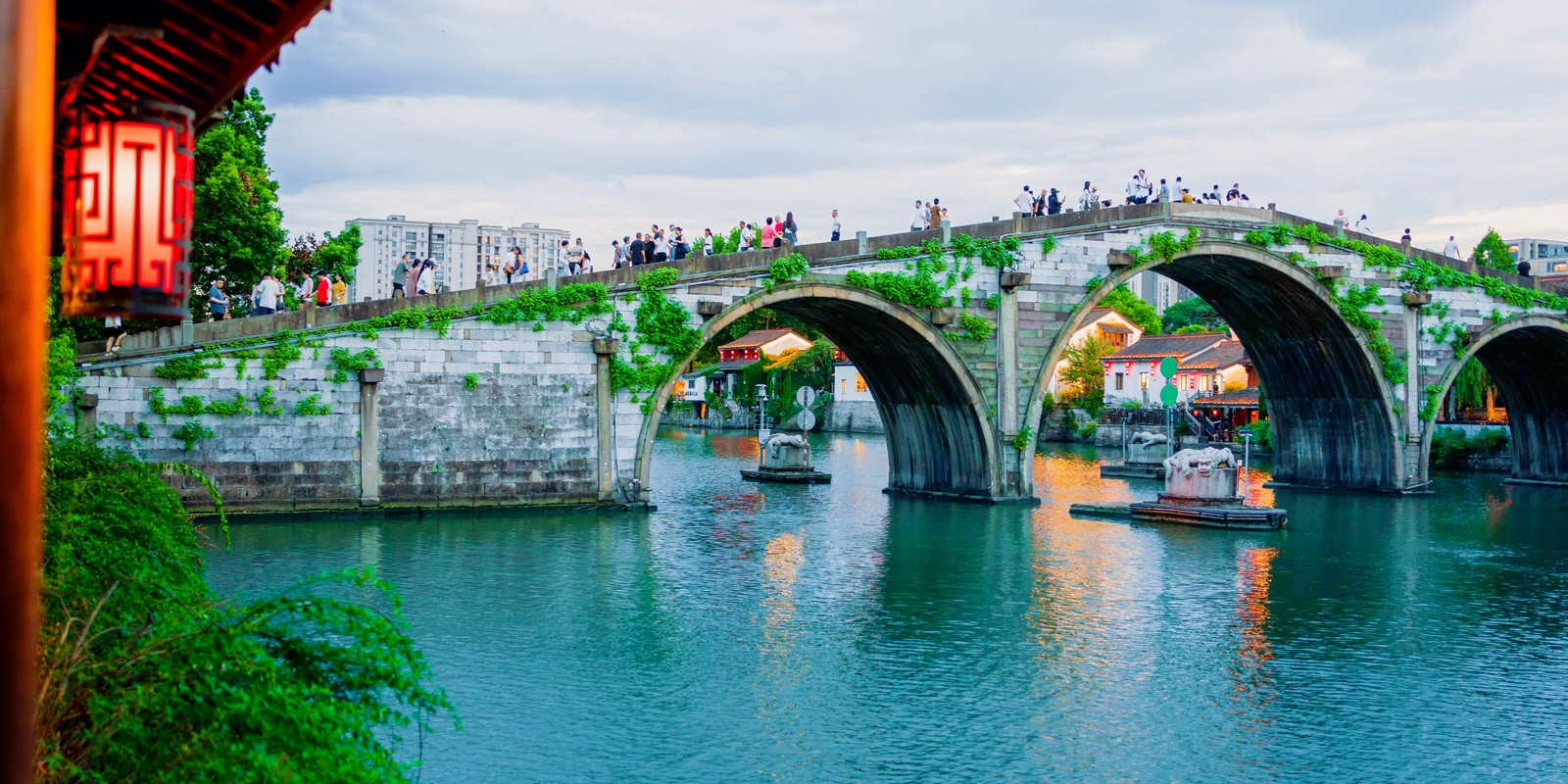
Unlike many World Heritage sites that are primarily archaeological, the Grand Canal remains a functioning waterway. More than 100,000 vessels still navigate its waters annually, carrying coal, sand, construction materials, and containers. The southern section between Hangzhou and Suzhou remains a popular tourist route, with boats gliding past ancient stone bridges, pagodas, and waterside villages that have changed little in centuries. The northern section, after decades of neglect, has been the focus of major restoration and dredging efforts in recent years, as China recognizes both the historical significance and the continued practical value of this extraordinary waterway.
🗺️ Exploring the Canal Today
The UNESCO listing covers 27 canal sections and 58 individual heritage sites spread across six provinces and two municipalities. Key highlights include the Hangzhou section, with its charming canal-side neighborhoods and the Gongchen Bridge; Suzhou, where the canal passes through classical garden landscapes; Yangzhou, with its historic dockyards and the exquisite Slender West Lake; Jining in Shandong, where the canal crosses the Yellow River; and Tongzhou in Beijing, the canal’s northern terminus. The best way to experience the canal is by boat, preferably in spring or autumn when the weather is mild and the water traffic is at its most picturesque.