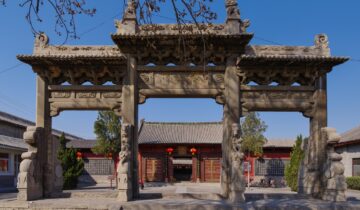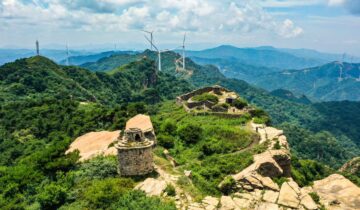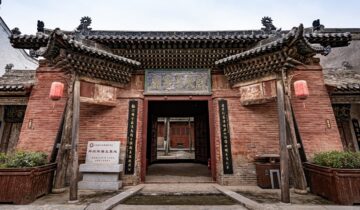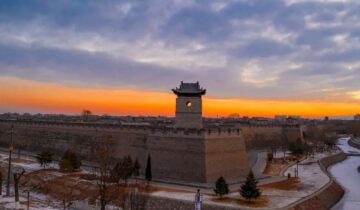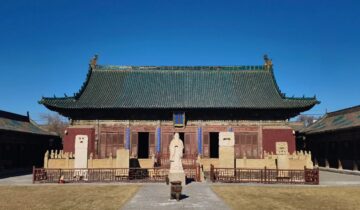
Daixian County, Shanxi Province

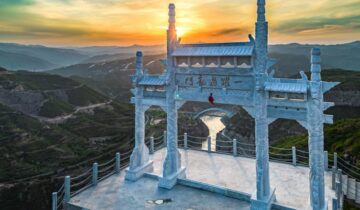
The great wall of China is not one wall but many — physical walls, yes, but also a set of fortified passes that controlled movement between the steppe and the sown. The most important of these passes, by any historical measure, is Yanmen Pass. For more than 3,000 years, this cleft in the Gouzhu Mountains — at the northern edge of Daixian County, under Xinzhou Prefecture — was the primary military gateway between the Central Plains and the Mongolian plateau.…
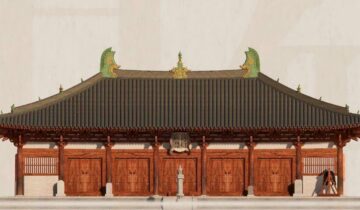
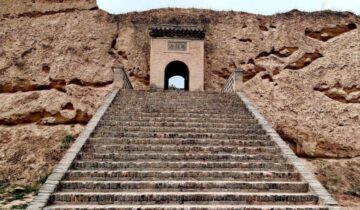
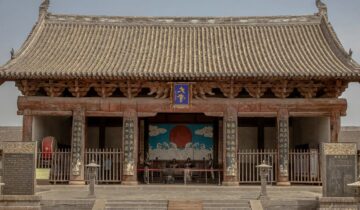
Wutai County, Shanxi Province

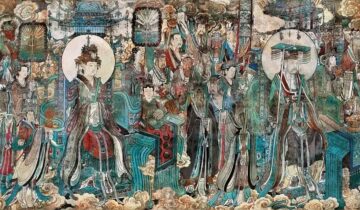
The oldest wooden building in the world stands in a village at the southern edge of Wutai County, in Xinzhou‘s southern hills. The third year of the Jianzhong reign of the Tang dynasty — 782 CE — is inscribed on its beam. It is the main hall of Nanchan Temple, and it has stood here for 1,244 years, through the fall of the Tang, through the Song, the Mongol conquest, the Ming and the Qing, through wars and revolutions. Inside,…

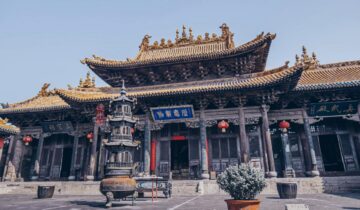
Dingxiang County, Shanxi Province

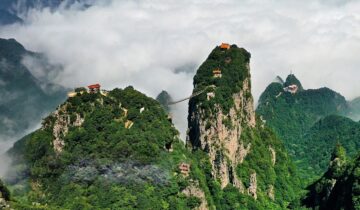
Every Shanxi story must eventually reckon with Yan Xishan — the warlord-governor who ruled the province from the fall of the Qing dynasty to 1949. His birthplace was Hedi’an, a village at the foot of the Wutai Mountains — then within Wutai County, later reassigned to Dingxiang. The village has since grown into Hedi’an Town, the seat of Dingxiang County. Dingxiang lies in eastern Xinzhou Prefecture, in the Xinding Basin, where three mountain ranges enclose a fertile flatland crossed by…

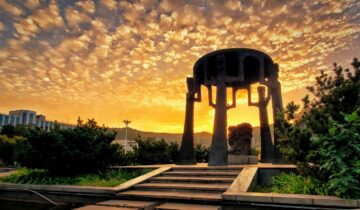
Hejin City, Shanxi Province

The Yellow River, having carved through the Loess Plateau for hundreds of kilometers, reaches its final canyon in the mountains that separate Shanxi from Shaanxi. The gorge narrows, the current quickens, and at the point where the water explodes through a rock cleft — the last mountain gate before the river spreads onto the floodplain — the Chinese call it Longmen, the Dragon Gate. This is Hejin City, known as Longmen for most of its history, at the northwestern corner…

Yongji City, Shanxi Province

Chinese literature has two great love stories, and one of them happens here. In Pujiu Temple, a Buddhist monastery in what is now Yongji City, the Tang scholar Zhang Sheng fell in love with Cui Yingying — the “startled” glance that set off the West Chamber romance, the most famous love story in the classical drama repertoire. The temple’s pagoda — Yingying Tower — still stands, one of only four echo-producing buildings in Chinese classical garden architecture and, by some…

Ruicheng County, Shanxi Province

Ruicheng sits in the crook of the Yellow River’s final bend — the last great bend before the river flows east to the sea. It is a position that defines the county. On the north side: the Zhongtiao Mountains. On the south: the river. Across the water: Shaanxi and Henan, close enough that the county calls itself “a place where a cock’s crow carries through three provinces” since ancient times. The Yellow River runs 81.58 kilometers through Ruicheng — the…

Pinglu County, Shanxi Province

A rock stands at Sanmen Gorge in the Yellow River where, according to local tradition, it has held firm in the current since Yu the Great carved the channel. “A pillar in the middle of the torrent,” the old histories call it — zhongliu dizhu — an idiom that has come to mean any person or thing that stands fast when everything around it is swept away. The rock is still there, in the stretch of river that borders Pinglu…

Xinjiang County, Shanxi Province

The old maps call it Jiangzhou. In 1912, when the imperial administrative system was dismantled after the fall of the Qing dynasty, the prefecture was downgraded to a county and given a new name: Xinjiang — literally “New Jiang” — to distinguish it from neighboring Jiang County. But the deeper history runs in the other direction. This place has been called Jiangzhou for most of the past 1,400 years, ever since the Sui dynasty moved the prefectural seat to its…

Jishan County, Shanxi Province

Chinese tradition credits Houji — “Lord of Grain” — with teaching humanity to farm. In the creation myth of agriculture, he planted the five grains, showed people how to sow and harvest, and set in motion the chain of knowledge that would feed what became the world’s most populous civilization. The place where this happened, according to the record kept by the county itself, was Jishan — the hill of Ji. Jishan claims to be the birthplace of Chinese agriculture.…

Wenxi County, Shanxi Province

In 111 BCE, Emperor Wu of Han was traveling through the southern reaches of his empire when a messenger arrived with news: the Han army had crushed the rebellion in Nan Yue (modern Vietnam). The emperor, pleased, named the place where he received the dispatch Wenxi — “heard news of victory.” The county has carried that name for more than 2,100 years. A name born of battlefield news. Fifty-nine chancellors from one family line. Two hundred varieties of flower bun,…

Wanrong County, Shanxi Province

The county called Wanrong sits where two rivers meet: the Yellow River and the Fen River converge at its southwestern edge, and two mountains — Gufeng and Jiwang — face each other across the plain. The water and the soil have been shaping this place for a long time. A Yangshao culture site at Jing village proves human settlement here five millennia ago. The county’s name was formed in 1954 from the merger of Wanquan and Ronghe, two older counties…

Linyi County, Shanxi Province

The story of Linyi County begins, indirectly, with a merchant. During the Spring and Autumn period, a man named Yi Dun arrived in what was then the state of Wei, noticed the land, and planted orchards — mulberry for silkworms, fruit trees for harvest, alongside cattle and sheep. He became, by the account of the county’s own history, “the richest man under heaven,” and later Chinese tradition remembers him as something close to a patron saint of commerce. His name…

Jiexiu City, Shanxi Province

The name Jiexiu means “Jie rested here” — a reference to Jie Zitui, the Jin dynasty minister who, according to the 2,600-year-old story, cut flesh from his own thigh to feed his starving lord during years of exile and, when the lord later became ruler and offered rewards, retreated into the mountains with his mother rather than claim recognition. The new ruler, Duke Wen of Jin, ordered the mountain set on fire to force Jie out. Jie and his mother…

Lingshi County, Shanxi Province

The county’s name comes from a stone — a curious gray rock that the Sui emperor Yang Jian reportedly pulled from a canal-digging operation in the sixth century. Local records describe it as something that looked like iron but was not metal, like stone but was not ordinary rock — and emitted a clear metallic ring when struck. The emperor took it as an auspicious omen — ling meaning spiritual, shi meaning stone — and in 590 CE ordered a…

Pingyao County, Shanxi Province

In 1997, when UNESCO added Pingyao to the World Heritage List, the citation described it as “an outstanding example of Chinese Han cities during the Ming and Qing dynasties” that preserves “all the features” of that era and reveals “an extraordinarily complete picture of the cultural, social, economic, and religious development” of China. The decision was the culmination of a preservation struggle that began two decades earlier, in 1979, when the county government was on the verge of demolishing the…

Close