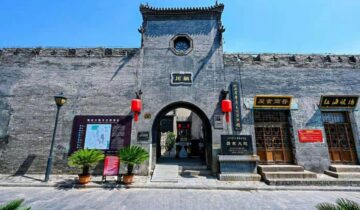
Qixian County, Shanxi Province

Four of the great pillars of Chinese literary culture have roots in this one county: the Tang poet Wang Wei, the lyricist Wen Tingyun, the historian Wang Tong (better known as Wenzhongzi), and Luo Guanzhong, the Ming novelist credited with Romance of the Three Kingdoms. More than 200 historical figures of national stature have ties to this county — including Qi Xi, a Spring and Autumn period statesman, and Wang Yun, the Eastern Han official who orchestrated the assassination of…
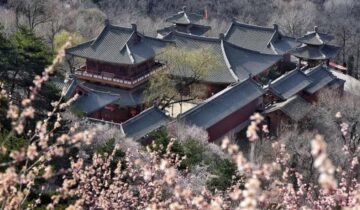
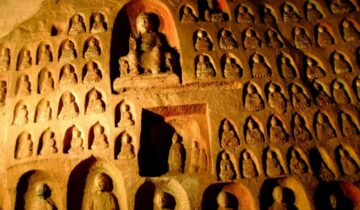
Shouyang County, Shanxi Province

The county’s name says it all: Shouyang, meaning “north of the Shou River.” But the word shou in Chinese means longevity, and that coincidence has shaped this place as thoroughly as any fact of geography. Shouyang County has been officially recognized as the “Hometown of Chinese Longevity Culture” and a National Longevity Culture Research Base by the China Folk Literature and Art Association. Local lore identifies it as the birthplace of the Old Man of the South Pole — the…

Xiyang County, Shanxi Province

In the 1950s and 1960s, a village on a barren hillside in eastern Shanxi became the most famous farming community in China. Its name was Dazhai, and its story — villagers carving terraced fields out of rocky slopes by hand — was elevated into a national slogan: “Learn from Dazhai in Agriculture.” Today, Dazhai is a 4A-rated scenic area with a museum and terraces that still climb the seven gullies and eight ridges the original settlers transformed. It sits in…

Heshun County, Shanxi Province

One of the oldest love stories in the Chinese canon — the Cowherd and the Weaving Maid, who meet once a year on the seventh night of the seventh lunar month — has a contested geography. Several counties claim the title of its birthplace. But Heshun County holds the official endorsement: in 2006, the China Folk Literature and Art Association formally designated it the “Hometown of the Cowherd and the Weaving Maid Culture,” and the legend was inscribed in the…

Zuoquan County, Shanxi Province

On a spring day in 1942, a deputy chief of staff of the Eighth Route Army was killed by Japanese mortar fire on a ridge the locals called Shizi Ling — Cross Ridge — in the Taihang Mountains. His name was Zuo Quan. Four months later, the county was renamed from its old name, Liao County, to Zuoquan County to commemorate the fallen commander. The Shizi Ling ridge where he died is now a national-level memorial. Zuoquan sits in the…

Yushe County, Shanxi Province

Shi Le, the Later Zhao emperor, was a Jie tribesman from what is now Yushe County. He founded a dynasty that controlled much of northern China from its capital at Xiangguo. His tomb in the village of Zhaowang, a provincial-level protected site, is a low mound of earth on a ridge in the southeastern Jinzhong hills. The county’s name, according to local records, comes from Shi Le himself: he renamed the area Yushe after the Han emperor Liu Bang’s ancestral…

Huairen City, Shanxi Province

On one side of a wooden table sat Li Keyong, the Shatuo general who controlled northern Shanxi. On the other sat Yelü Abaoji, the Khagan of the Khitans who would soon found the Liao dynasty. The two men met to negotiate an end to years of raiding along the border, and the place was recorded in history as where both parties “cherished the thought of benevolence” — huaixiang renren. The name stuck, and when the town became a county in…

Youyu County, Shanxi Province

The story of Youyu County is not one you expect to hear from northern Shanxi. It is not about coal — though 3.4 billion tons sit under its 1,969 square kilometers — nor about the Great Wall that runs through its northern border with Inner Mongolia. It is about mud. For over seventy years, the people of this small county in northern Shuozhou, with fewer than 83,000 residents, planted trees. They planted them on slopes so eroded that the topsoil…

Yingxian County, Shanxi Province

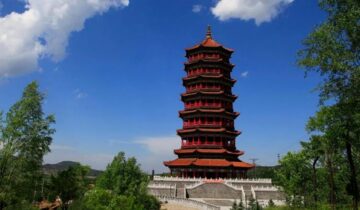
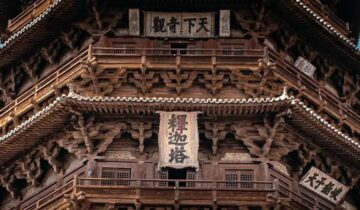
In 1056, the Liao dynasty completed a wooden pagoda in a small county at the northern edge of Shanxi that remains the tallest wooden structure ever built. The Yingxian Wooden Pagoda — officially the Sakyamuni Pagoda of the Fogong Temple — rises 67.31 meters over the county town of Yingxian in northeastern Shuozhou. Its base is 30.27 meters in diameter, it weighs roughly 7,400 tons, and it contains not a single iron nail: every beam, bracket, and joint is held…

Shanyin County, Shanxi Province

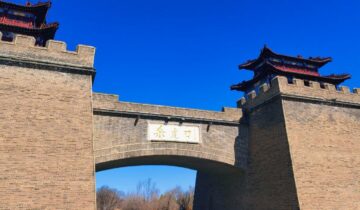
The ruined arch known as the Moon Gate — a graceful crescent of Ming brickwork silhouetted against the steppe sky — is the most photographed section of the Great Wall in Shanxi. It sits on a ridge above the village of Xinguangwu in Shanyin County, a frontier county in northern Shuozhou where the wall approaches the wilder landscape of the Inner Mongolian borderlands. The Ming dynasty built it in 1374, and the 20-kilometer stretch that runs through Shanyin — entirely…

Gaoping City, Shanxi Province

In a country that prizes its architectural heritage, few counties can claim four separate “only in China” records — but Gaoping does. It holds the oldest surviving wooden residence, the oldest surviving stage, the best-preserved Song dynasty temple murals, and the only “broken-beam” timber structure in the country. And these are just the highlights of a city of 946 square kilometers that packs 22 nationally protected heritage sites into its hills between the Zezhou Basin and the southern Taihang range.…

Zezhou County, Shanxi Province

Zezhou County does not have its own county seat. Its government operates from the eastern edge of Jincheng, the prefectural city that surrounds it on three sides — an administrative oddity that reflects the county’s history as the territory formerly governed as Zezhou prefecture. The arrangement gives Zezhou the highest GDP of any county in Jincheng — 59.01 billion yuan in 2025, driven by 38.2 million tons of coal, 14.4 million tons of steel, and an industrial sector that drove…

Lingchuan County, Shanxi Province

On a sheer limestone cliff in the southern Taihang range, a ribbon of asphalt clings to the rock face at an elevation where clouds form beneath your feet. The Xiyagou Hanging Road — a mountain-hugging road carved by local villagers over nearly three decades — was the only way for the mountaintop settlement to reach the valley floor. The road is now a landmark of the Wangmangling scenic area, the crown of the Nantaihang range, where the ridgeline splits Shanxi…

Yangcheng County, Shanxi Province

Walk through the gate of Diji City (Diji Cheng) in Runcun, and the first thing you notice is the wall. The outer face is ordinary blue brick, but the interior — visible where chunks have fallen away — is packed with hundreds of iron-smelting crucibles, their tapered mouths stacked in neat layers, fused with mortar and stone. No other fortress in China is built this way. The crucibles were a waste product of the ancient ironworks along the Qin River…

Qinshui County, Shanxi Province

In 376 BCE, the three great houses of Jin — Zhao, Wei, and Han — carved up the territory their ancestors had served and moved the last legitimate Jin ruler to a small walled town called Duanshi. There is no surviving palace, no royal archive, no tomb mound. But Qinshui County in northwestern Jincheng quietly preserves the final address of one of the most consequential states in Chinese history — a kingdom that had dominated the Central Plain for 650…

Close