Qinyuan County, Shanxi Province

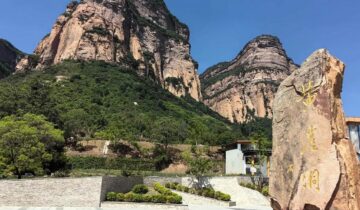
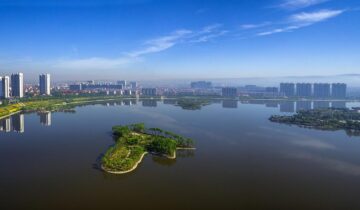
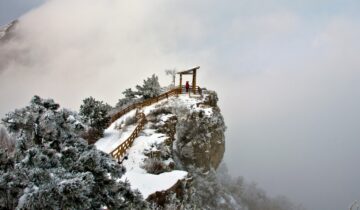
Try to find another county in China that contains a national nature reserve, two national forest parks, a national wetland park, and a national grassland park all within its borders — the Lingkong Mountain Nature Reserve, the Lingkong Mountain Forest Park, the Bodhi Mountain Forest Park, the Qinhe Source Wetland Park, and the Grassland Natural Park. Qinyuan County in northwestern Changzhi has all five — a combination the county considers unique in Shanxi and rare nationwide. At the center of…
Qinxian County, Shanxi Province

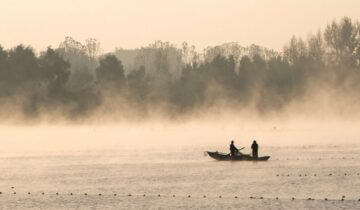
Try naming a county in Shanxi that has 270 springs. Just one. Qinxian County in northern Changzhi makes the claim with apparent ease — eight rivers, nine lake-sized reservoirs, 126 tributaries, and more than 270 recorded springs, all within a 1,320-square-kilometer frame where the annual water outflow is the headwater of the entire Hai River system. The place is so wet that the local tourism board markets it as a “northern water city,” a paradox that has earned it a…

Wuxiang County, Shanxi Province

During the eight years of the anti-Japanese war, the population of this county was 140,000. Of those, 90,000 joined the armed resistance. Twenty thousand never came home. No other county in China can match that ratio, and the reason is simple: the supreme command of the Communist-led Eighth Route Army set up its headquarters here and stayed for most of the war. Wuxiang County in northern Changzhi was, in effect, the wartime command center of resistance China — a 1,610-square-kilometer…

Zhangzi County, Shanxi Province

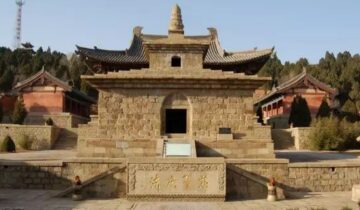
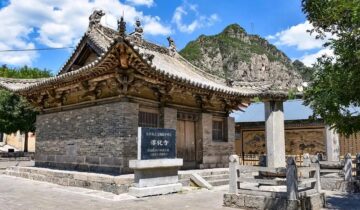
Most counties in China would count themselves fortunate to have one pre-Yuan wooden building. Zhangzi County, in southeastern Changzhi, has 39 — more than any other county in the country. That figure alone draws heritage specialists, but among those 39 temples, one complex holds a concentration unmatched across the province. The temple is Faxing Temple, founded in 401 CE (Northern Wei), on Cuiping Mountain in Cilin township, 20 kilometers southeast of the county seat. Its collection spans three dynasties: a…

Huguan County, Shanxi Province

An emperor of the Qin dynasty established this county in 221 BCE, on the day he unified China. The First Emperor’s officials named it after a natural feature — a mountain shaped like a pot (hu) with a military pass (guan) at its mouth — and placed it at the strategic seam where the Taihang Mountains meet the North China Plain. Twenty-two centuries later, Huguan County of southeastern Shanxi’s Changzhi region still occupies that exact spot: 1,013 square kilometers in…

Licheng County, Shanxi Province

Two phrases that every Chinese speaker uses without thinking about their origin come from this county. Li min bai xing — “the common people” — is a compound that began as the names of two clans, the Li and the Wei, who lived in the ancient state of Li during the Shang dynasty. And xi er gong ting — “to wash one’s ears and listen respectfully” — comes from a story about Xu You, a hermit who lived on a…

Pingshun County, Shanxi Province

In all of China, nine buildings made of wood from the Tang dynasty and the Five Dynasties period that followed it are known to survive above ground. Three of them are in Pingshun County. That concentration — one-third of the nation’s oldest timber architecture — makes this 1,550-square-kilometer stretch of the Taihang Mountains in southeastern Changzhi the densest concentration of ancient wooden construction anywhere in China, and the only county that can show a complete chronological sequence from the Tang…

Xiangyuan County, Shanxi Province

Some 1,600 years ago, a man born in what is now Xiangyuan County walked out of China and kept walking west. His name was Faxian, and at the age of sixty-two he set off from Chang’an along the Hexi Corridor, crossed the Pamirs into India, and spent a decade collecting Buddhist scriptures he carried back on foot. He was the first Chinese monk known to have made the journey and returned to write about it — 230 years before Xuanzang…

Yuxian County, Shanxi Province

Some 2,600 years ago, during the Spring and Autumn period, a small state called Chouyou existed in what is now eastern Shanxi. It was absorbed by the Jin state, and then Jin itself fragmented — but the territory produced a story that would travel far beyond its borders. When the Zhao clan was massacred by political rivals, a loyal retainer named Cheng Ying swapped his own infant son for the orphaned Zhao Wu and fled into the Taihang Mountains, where…

Zuoyun County, Shanxi Province

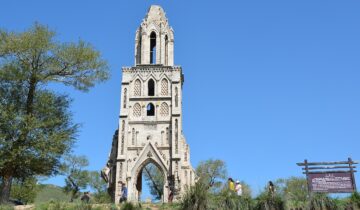
On a ridge in northwestern Shanxi, the Great Wall runs along a spine of black basalt at 2,000 meters above sea level. A hundred meters away stands the ruined spire of a Gothic church, its pointed arches and carved stone a remnant of a German mission founded in 1876. Nowhere else in China do the wall and a Western cathedral share the same frame. That ridge is the Motianling Great Wall, the highest section of the wall in the world,…

Lingqiu County, Shanxi Province

Lingqiu County is named for a king. The name comes from the tomb of King Wuling of Zhao, the Warring States ruler who introduced cavalry and nomadic dress to his army in the 4th century BCE — the hufu qishe reform that made Zhao a military power. He was buried here after his death, and the settlement that grew around the tomb took its name from his resting place. The county, 2,732 square kilometers in the southeastern corner of Datong,…

Yanggao County, Shanxi Province

Yanggao County sits at the junction of Shanxi, Hebei, and Inner Mongolia in the northeastern corner of the province — 1,598 square kilometers of terrain where the Great Wall runs through the hills and the Sanggan River cuts the valley. The county has three distinct personalities, each on a different scale of time: it is one of the most important Paleolithic sites in China, a border fortification that guarded Datong for centuries, and an agricultural producer whose 2025 GDP reached…

Gujiao City, Shanxi Province

Drive 23 kilometers west from central Taiyuan and the landscape tilts upward into the Lüliang Mountains. The road follows the Fen River through a narrow valley flanked by ridges that climb to more than 95 percent of the land area. This is Gujiao, Taiyuan’s only county-level city and the city it built its coal economy on. ⛏ The Coal Sea Pearl 8.04 billion tons of coal reserves spread across 754 km² of coalfield — half the city’s total area —…

Loufan County, Shanxi Province

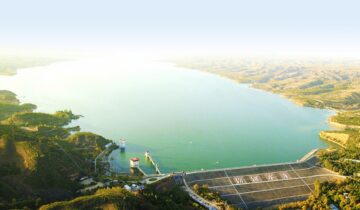
In the upper reaches of the Fen River, tucked into the spine of the Lüliang Mountains, Loufan County is where more than half of Taiyuan’s drinking water starts its journey south. The Fenhe Reservoir, the largest in Shanxi with a capacity of 720 million cubic meters, sits here collecting runoff from the surrounding peaks. Since the Yellow River diversion began routing water through the Fen system, the county has been designated the capital’s protected drinking water source, and that role…

Yangqu County, Shanxi Province

Yangqu County makes carbon fiber badminton rackets. Shanxi Xiben Composite Materials, a local company, built an entire supply chain — from raw fiber to finished racket — and brought products to market in the same year it signed its first agreement. That mix of industrial ambition and unexpected craft runs through the whole county, which history remembers as Sanjin Shouyi — the First City of Shanxi. A county that makes carbon fiber badminton rackets. Six national-level heritage sites spanning nearly…

Close