Hanyin County, Shaanxi Province

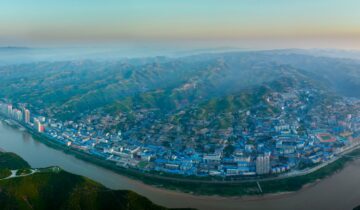
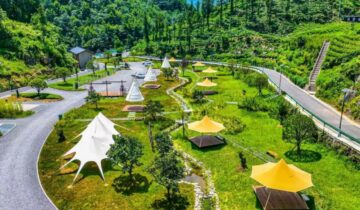
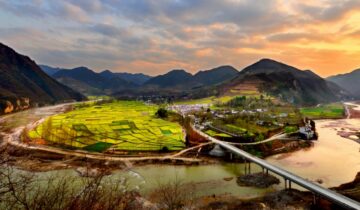
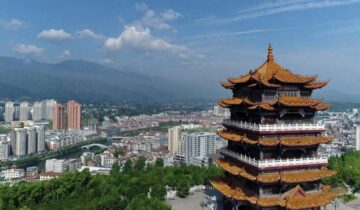
Tucked between the Qinling and Daba mountains, where the Han River meets the Yue River, Hanyin County lies in central Ankang — a land of terraced rice paddies, selenium-rich soil, and a literary legacy that belies its modest size. Hanyin covers 1,365 square kilometers, administers 10 towns, and has a resident population of 235,900 (registered 307,200). It carries four proud titles: Land of Rapeseed Flowers, Land of Selenium, Land of Shaanxi Cuisine, and Land of Calligraphy. FIVE HALLMARKS OF HANYIN…
Shenmu City, Shaanxi Province

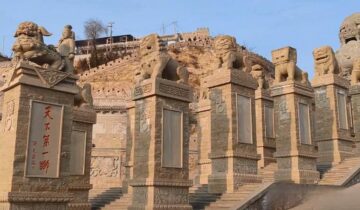
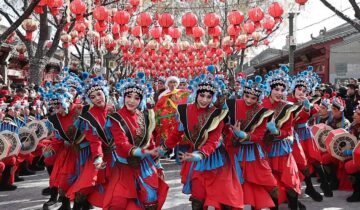
On a map of China’s county-level economies, one name towers above all others in the western half of the country: Shenmu, administered by Yulin. Covering 7,635 square kilometers — the largest county-level division in Shaanxi — and sitting at the intersection of Shaanxi, Shanxi, and Inner Mongolia, Shenmu is a city that runs on coal, capital, and geography. In 2024, its GDP reached a staggering 250.26 billion yuan, making it the wealthiest county-level city in western China by a wide…

Zizhou County, Shaanxi Province

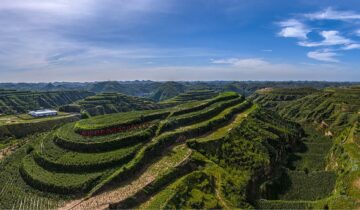
Most Chinese counties carry names that reach back centuries or millennia. Zizhou is different: it was created in 1944, carved from parts of Suide, Mizhi, Hengshan, and Qingjian counties, and named after Li Zizhou, a revolutionary martyr and early CPC leader in northern Shaanxi. The county lies at the southern edge of Yulin, covers 2,024 square kilometers, and administers 11 towns, one township, and 274 villages with a registered population of 291,000. The county’s history reaches far deeper than its…

Qingjian County, Shaanxi Province

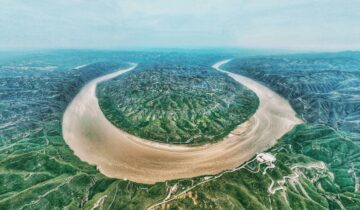
At the confluence of the Yellow River and the Wuding River, deep in the loess hills of eastern Yulin, Qingjian County has the distinction of being both a cradle of Chinese civilization and the birthplace of the Chinese Communist revolution in northwest China. Here, 5,000-year-old Yangshao and Longshan culture sites sit alongside the very trenches where the Qingjian Uprising of 1927 fired the first shot of armed struggle in the northwest. Qingjian covers 1,881 square kilometers, administers 9 towns and…

Wubu County, Shaanxi Province

Wubu County is the smallest county in Yulin by area — just 420 square kilometers — yet it punches far above its weight. Nestled against the Yellow River in southeastern Yulin, Wubu has produced an extraordinary number of modern Chinese figures for a county its size. Mu Shengzhong built the Qinghai-Tibet Highway; Liu Qing wrote The Builders; the economist Zhang Weiying, the folk singer Zhang Tian’en, and the master paper-cutter Jia Sigui all came from this 420-square-kilometer stretch of the…

Jiaxian County, Shaanxi Province

Jiaxian County is where the folk song The East Is Red (Dongfang Hong) was born. Farmer-singer Li Youyuan composed it in these hills overlooking the Yellow River, and the county’s revolutionary legacy runs deep — Mao Zedong spent 100 days here in 1947, directing the battle of Shajiadian that turned the tide of the civil war in northwest China. Today Jiaxian County, in northeastern Yulin, covers 2,030 square kilometers with 12 towns, one subdistrict, and a population of about 256,000.…

Mizhi County, Shaanxi Province

Mizhi County takes its name from the Mizhi River — whose waters, local tradition holds, make the millet grown here yield a fine, creamy rice-water broth. The name dates back centuries, but the story of Mizhi goes much deeper: carbonized millet grains excavated here show that the crop was grown in this part of Yulin 4,000 to 5,000 years ago. Today Mizhi covers 1,212 square kilometers, with 8 towns, one subdistrict, and a population of about 217,600 registered (135,600 resident).…

Suide County, Shaanxi Province

The name Suide comes from a Northern Dynasties era phrase meaning to pacify the people with virtue. Nearly fifteen centuries later, Suide County in eastern Yulin sits at the intersection of four provinces, where the cultures of northern Shaanxi come together in what has been called the heartland of northern Shaanxi folk tradition. The county covers 1,853 square kilometers — a landscape of loess hills and gullies — with 15 towns, 339 villages, and a registered population of 340,800 (roughly…

Dingbian County, Shaanxi Province

In 1042, the Northern Song statesman and general Fan Zhongyan gave this frontier county its name: Dingbian, meaning to pacify the border. Nearly a thousand years later, Dingbian County in southwestern Yulin has become something Fan Zhongyan could not have imagined — China’s top oil-and-gas producing county-level jurisdiction, where sky, earth, wind, sunlight, oil, salt, coal, and gas all concentrate within a single border. The county covers 6,920 square kilometers — the third-largest in Shaanxi — and administers 16 towns,…

Jingbian County, Shaanxi Province

On the southern edge of the Mu Us Desert, in southwestern Yulin, sits Jingbian County — a place where six resource types converge and a 1,600-year-old capital still stands in the sand. Its 5,088 square kilometers hold 16 towns, one subdistrict, and a registered population of 391,300 residents. JINGBIAN COUNTY — SIX RESOURCES PROFILE COAL 3.5+ B t Proven; total 15-20 B predicted OIL 300+ M t Proven reserves NATURAL GAS 466.6 B m3 Proven reserves SALT 1,500-2,000 B t…

Fugu County, Shaanxi Province

Fugu County sits at the northernmost tip of Shaanxi’s Yulin prefecture, where Shaanxi, Shanxi, and Inner Mongolia converge at a bend of the Yellow River — a place where the Great Wall runs east-west and the Yellow River curls around the county seat. The area covers 3,229 square kilometers, with 14 towns, 172 villages, and a population of about 250,000. Local tradition calls it the place where a rooster’s crow is heard in three provinces. The numbers that define Fugu,…

Foping County, Shaanxi Province

Nowhere in China has a higher density of wild giant pandas than Foping County. This 1,279-square-kilometer county in northeastern Hanzhong, with just 35,000 residents spread across 6 towns and one subdistrict, sits squarely in the heart of the Qinling Mountains — home to all four of the Qinling treasures: the giant panda, golden snub-nosed monkey, takin, and crested ibis. It is, in every meaningful sense, a biodiversity stronghold. QINLING PANDAS FIELD REPORT — FOPING STATION POPULATION RANK #1 Highest wild…

Liuba County, Shaanxi Province

At 92 percent forest cover, Liuba County is the greenest county in Hanzhong — and one of the greenest in all of Shaanxi. This 1,970-square-kilometer county, home to just 42,000 people, sits in the southern Qinling Mountains at the historic pass known as the Qin-Han Throat — a strategic corridor between the Wei River plain and the Hanzhong basin since antiquity. With 7 towns, one subdistrict, 73 villages, and 3 communities, Liuba is both small and ecologically extraordinary: a county…

Zhenba County, Shaanxi Province

The Eastern Han general Ban Chao — who reopened the Silk Road and brought the Western Regions under Chinese control — held a noble fief in the remote mountains of what is now Zhenba County. Today Zhenba, a 3,437-square-kilometer county in the southeastern corner of Hanzhong deep in the Daba Mountains, is known for something else entirely: the world’s highest-altitude tiankeng, or giant sinkhole, discovered here in what geologists call one of the great geographic finds of the 21st century.…

Lueyang County, Shaanxi Province

In the sixth year of the Yuanding era (111 BCE), the Western Han court established a new county on the upper reaches of the Jialing River, at the foot of the Qinling Mountains where Shaanxi meets Gansu and Sichuan. That county is Lueyang County, a 2,831-square-kilometer territory in the western part of Hanzhong, shaped by more than 2,130 years of continuous administrative history. Known historically as a Qin-Shu thoroughfare and Shaanxi-Gansu link, Lueyang sits where the Baocheng Railway runs north-south…

Close