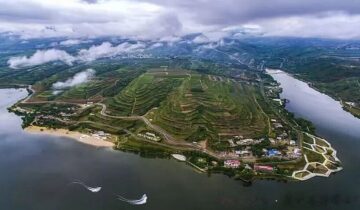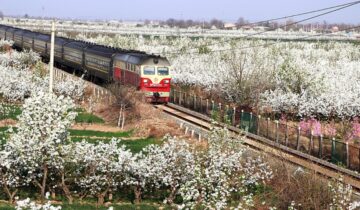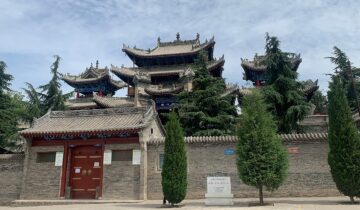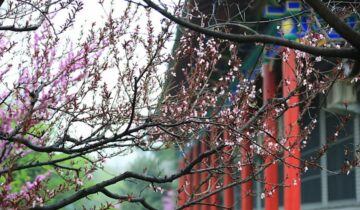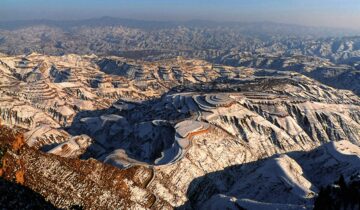
Yanchang County, Shaanxi Province

In 1907, a drilling rig on the west bank of the Yan River struck oil, and China burned its first domestically produced petroleum. The well was in Yanchang County, which sits in eastern Yan’an where the Yan River empties into the Yellow River. The county’s name means lengthening Yan — a reference to the river’s long course through its territory — and oil has flowed through much of that history. Ban Gu’s Book of Han from the 1st century notes…
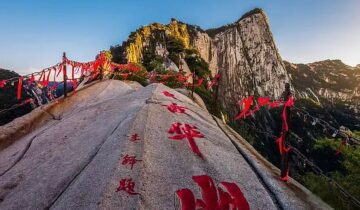
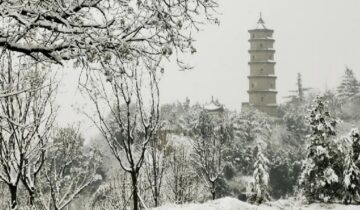
Huayin City, Shaanxi Province

Huayin sits at the foot of Huashan, the most famous of China’s Five Sacred Mountains — a sheer granite massif that has drawn pilgrims, poets, and climbers for millennia. Located in eastern Weinan, this county-level city of 676 square kilometers functions essentially as Huashan’s gateway: the mountain’s east peak rises directly from the city’s southern edge, and the Huashan North high-speed rail station channels 3 million visitors a year into the scenic area. But Huayin is more than a base…

Hancheng City, Shaanxi Province

A city that calls itself the hometown of Sima Qian — the Han dynasty historian who produced the Records of the Grand Historian — and also the base of Shaanxi’s largest steel industry, all within the same 1,591 square kilometers on the Yellow River’s west bank, is a city of unusual contradictions. Hancheng, part of Weinan in eastern Shaanxi, has been known as the Dragon Gate since the Western Zhou, when it was established as the Han Marquis State. It…

Fuping County, Shaanxi Province

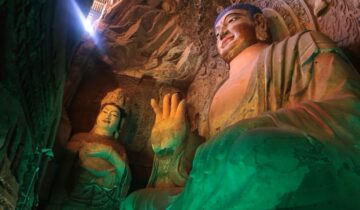
The county’s name means abundant peace, and Fuping — part of Weinan in central-northern Shaanxi — has been a settled administrative unit for more than 2,400 years. Its 1,242 square kilometers bridge the Guanzhong Plain and the loess plateau, a landscape that has yielded five Tang dynasty imperial mausoleums, a Jin dynasty iron Buddha, and a roster of figures who shaped Chinese politics from the Qin dynasty to the modern era. Qin · Wang Jian → Ming · Yang Jue…

Baishui County, Shaanxi Province

In northern Weinan, Baishui County is linked to four figures foundational to Chinese civilization — Cangjie, the Yellow Emperor’s historian said to have devised the written script; Du Kang, honored as the god of wine for pressing the first vintage; Leigong, who shaped the earliest pottery; and Cai Lun, the Han dynasty official who perfected papermaking. Local tradition calls them the Four Sages, and temples, workshops, and lore across the county’s 986 square kilometers keep their memory alive. ✍️ Cangjie…

Pucheng County, Shaanxi Province

In 716 CE, the Tang court renamed the county on the eastern slope of the Guanzhong Plain Fengxian (serve the ancestors) because the ridge northwest of the county seat cradled the tomb of Emperor Ruizong (Li Dan), who was buried at Qiaoling in the county. Over the following decades, three more Tang sovereigns were buried in the same hills, giving what is now Pucheng County the densest concentration of imperial mausoleums in China outside the major Tang cluster in Xi’an.…

Chengcheng County, Shaanxi Province

Few places in Shaanxi pack as many extremes into 1,121 square kilometers as Chengcheng County. Its loess tableland, cut by the Luo River valley, holds 2,500 years of continuous ceramic production — the world’s largest surviving ancient kiln complex. The same county administers 9 towns and 1 subdistrict with a population of roughly 400,000, sitting within Xi’an’s one-hour economic circle and connected by four railways — including a Green Giant bullet-train service — and three expressways. But what distinguishes Chengcheng…

Heyang County, Shaanxi Province

The first poem in the Book of Songs begins with a cry of longing: Guan-guan go the ospreys, on the islet in the river. That river was the Yellow River, and the islet was in the waters of what is now Heyang County — 31 poems in the anthology either originated here or describe the area. Heyang’s ancient name was Youshen State, and it counted Yi Yin, honored in Chinese tradition as the founding figure of cuisine, among its native…

Dali County, Shaanxi Province

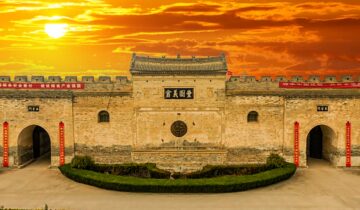
The old city wall of Dali was built in the shape of a turtle. The south gate formed the head — two round openings above the gate tower served as the eyes — while the north gate became the tail, with a pagoda outside the wall standing in for the tip. The four side gates extended as the creature’s limbs, complete with barbican entrances that curled inward like folded claws. When the wall was first raised in 104 BC under…

Tongguan County, Shaanxi Province

At the eastern edge of the Guanzhong Plain, the Yellow River makes its first decisive turn eastward after a long journey from the north, and on the inside of that bend sits Tongguan — a county in eastern Weinan — shaped by the river, the mountains, and the strategic ambitions of dynasties. Its 526 square kilometers contain three sharply contrasting zones: the Qinling mountain slopes covering the southern 42.4 percent of the county, a band of loess tableland across the…

Binzhou City, Shaanxi Province

Three and a half thousand years ago, the Zhou ancestor Gongliu taught the planting of the five grains on this land and established the ancient Bin state. The daily life of his people — the work, the seasons, the customs of the Bin valley — was later recorded in the Book of Songs, in a cycle of poems called Bin Feng that gave this part of Shaanxi the name Home of the Book of Songs. The name Bin itself has…

Xingping City, Shaanxi Province

Xingping occupies 507 square kilometers of the central Guanzhong Plain, with a built-up area of 22.89 square kilometers. It lies 25 kilometers west of Xianyang and sits within the Xi’an–Xianyang metropolitan circle. The name Xingping dates to 757 AD, during the Tang dynasty, when the imperial Xingping Army was honored for suppressing the An Lushan rebellion and the settlement was renamed after it. Before that, the area served as the capital region for four dynasties — Zhou, Qin, Han, and…

Chunhua County, Shaanxi Province

The county’s name was bestowed by imperial decree. Emperor Taizong of Song (Zhao Jiong) gave Chunhua his own reign title in the 10th century, and the name has been in continuous use for over a thousand years. Before that, this wedge of the loess plateau 70 kilometers north of Xi’an had served as a royal hunting ground and military garrison since the Zhou dynasty, so central to the ancient capitals that it was known as one of the Sanfu mingyi,…

Wugong County, Shaanxi Province

Wugong County was founded in 350 BC, the same year Qin Xiaogong consolidated the scattered settlements of the Guanzhong Plain into administrative counties after Shang Yang’s reforms. Among those original forty-one counties were Wugong, Tai, and Meiyang, and the names survive in the local landscape today. The county took its name from Wugong Mountain (now Taibai Mountain) to the south and Wugong River (now Shitou River) to the west. After more than 2,374 years of continuous history, Wugong remains on…

Xunyi County, Shaanxi Province

An ancient Chinese saying preserved in the county gazetteer reads: Qin di zui sheng, wu ru Xunyi — of all the fine lands in Qin, none surpasses Xunyi. What gives the claim weight is the county’s double inheritance: it holds the deepest archaeological layers of the Zhou civilization, where the clan leader Gongliu established the Bin state 3,600 years ago, and it was the southern redoubt of the Shaanxi-Gansu-Ningxia Border Region, where the revolutionary government operated from Malan. 🏛 Ancient…

Close