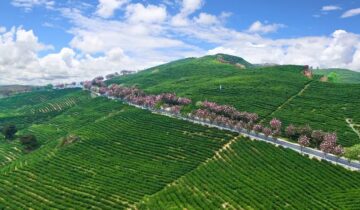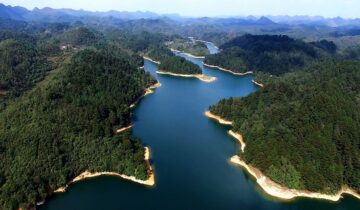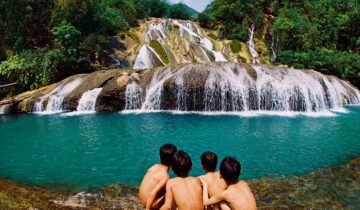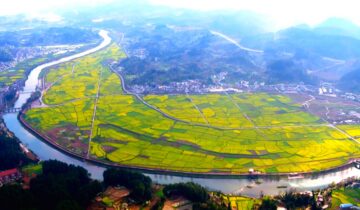
Zhouzhi County, Shaanxi Province

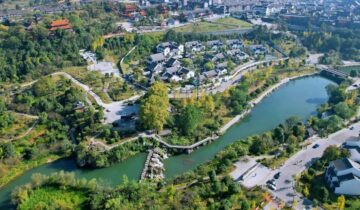
The county’s name is an ancient Chinese riddle written out in two characters: Zhou means mountain that winds and Zhi means water that bends. Together they describe the landscape of Zhouzhi County, which lies on the Guanzhong Plain where the Qinling Mountains meet the Wei River, about 78 kilometers southwest of Xi’an. Covering 2,974 square kilometers — three-quarters of it mountains — it is the western gateway to the provincial capital. Zhouzhi was established as an administrative county under Emperor…
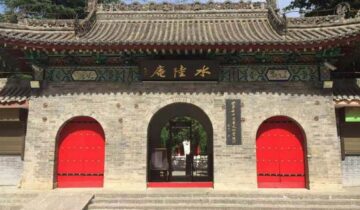
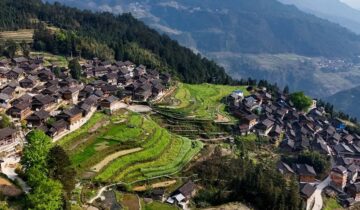
Lantian County, Shaanxi Province

In 1964, paleoanthropologists working in the Qinling foothills uncovered a fossilized cranium that rewrote the timeline of early human habitation in East Asia. The Lantian Ape Man, dated to roughly 1.15 million years ago, was found at Gongwangling in Lantian County — an area whose name, meaning blue field, had long referred to something quite different: the beautiful jade quarried from its mountains since Neolithic times. Lantian sits 22 kilometers southeast of central Xi’an, covering 2,006 square kilometers where the…

Sandu Shui Autonomous County, Guizhou Province

Sandu is the only Shui autonomous county in China — and the demographic heart of the Shui people, with 67.2 percent of its 383,600 residents belonging to the Shui ethnic group and over 63 percent of all Shui in the country living within its borders. This county in southeastern Qiannan Prefecture, covering 2,400 square kilometers and straddling the Moon Mountain and Leigong Mountain ranges, has preserved a set of cultural traditions almost without parallel: a written language (Shui script), a…

Huishui County, Guizhou Province

Huishui County sits in southeastern Qiannan Prefecture, 30 kilometers south of Guiyang, close enough to be counted as part of the provincial capital’s urban core zone — yet it was once the prefectural seat that ruled the area that later became Guiyang. That historical inversion is captured in a local saying still repeated today: “First came Chengfan Prefecture, then came Guiyang Prefecture.” In 1474, the Ming dynasty established Chengfan Prefecture here; in 1572, the prefecture was moved to what is…

Longli County, Guizhou Province

Longli County lies 28 kilometers east of Guiyang — closer than many suburbs — linked by ten fast-traffic routes that make the county an effective eastern extension of the provincial capital. Administratively, it belongs to Qiannan Buyi and Miao Autonomous Prefecture. Longli covers 1,521 square kilometers with 36 ethnic groups including Han, Buyi, and Miao. Longli has 165 large-scale industrial enterprises — the most of any county in Qiannan Prefecture and the fourth-most in the entire province. It hosts the…

Changshun County, Guizhou Province

Changshun County sits just 50 kilometers west of Guiyang, making it one of the closest counties to the provincial capital within Qiannan Buyi and Miao Autonomous Prefecture. The Guangshun Development Zone lies only 10 kilometers from the Gui’an New Area, positioning the county as a natural extension of the Guiyang urban economy. Changshun covers 1,548 square kilometers with a population that reached 270,000 by the end of 2025, 57 percent of it belonging to ethnic minorities. The area was once…

Luodian County, Guizhou Province

If you’re looking for winter warmth in Guizhou, Luodian County has the best claim. Tucked into the Red River valley where Guizhou meets Guangxi, this county of 367,000 people averages 19.6°C year-round, with winter temperatures holding at 11.6°C and a frost-free period of 335 days. It calls itself a “natural greenhouse” — the nickname is earned, not aspirational — and has been recognized as China’s Best Winter Shelter, a China Climate-Livable City, and a China Longevity Town. Luodian falls within…

Pingtang County, Guizhou Province

The world’s largest radio telescope sits in a karst depression in the hills of Pingtang County, scanning the Milky Way for pulsars and signs of extraterrestrial intelligence. Five-hundred-meter Aperture Spherical Radio Telescope — FAST, or “China’s Sky Eye”, as Xi Jinping called it in his inauguration letter — began operations in September 2016 and will remain the global leader in single-dish radio astronomy for the next two to three decades. The telescope’s presence has reshaped this southern Guizhou county of…

Dushan County, Guizhou Province

The southernmost county in Guizhou, Dushan sits at the border with Guangxi — a position that has earned it the name “South Gate of Guizhou.” For centuries this was the primary land corridor from the southwestern interior to the coast, a role it still plays as a key node on the Western New Land-Sea Corridor. Dushan belongs to the Qiannan Buyi and Miao Autonomous Prefecture, covering 2,477 square kilometers with a population of 352,000 as of 2025. Dushan has been…

Weng’an County, Guizhou Province

Paleontologists working in Weng’an County uncovered animal fossils dating back 610 million years, officially recognized as the oldest ever discovered. The find reshaped scientific understanding of when complex life first emerged on Earth. Today, this central Guizhou county — part of Qiannan Buyi and Miao Autonomous Prefecture — covers 1,974 square kilometers and is home to roughly 500,000 people. Weng’an sits on proven phosphate reserves of 1.57 billion tons, making it a significant player in China’s fertilizer and chemical supply…

Guiding County, Guizhou Province

Guiding County, a 1,631-square-kilometer wedge of land in southeastern Qiannan Prefecture, sits 60 kilometers east of Guiyang with an unusual claim: it is one of the few county-level administrations in Guizhou with four railway stations, two of them high-speed. The Shanghai-Kunming, Guiyang-Guangzhou, and Guiyang-Nanning high-speed lines all pass through, alongside five expressways. Historically, Guiding was the strategic throat of central Guizhou — the main route between Guiyang and eastern Hunan ran through here, and the county guarded the approach to…

Libo County, Guizhou Province

Libo County lies at the southern tip of Qiannan Prefecture, on the transition zone, on the transition zone where the Yunnan-Guizhou Plateau gives way to the Guangxi hills. It is the closest county in the province to the sea routes of the South, and it holds two world-class designations: the South China Karst World Natural Heritage site (inscribed in 2007) and the World Man and Biosphere Reserve. Local officials call it the “Green Gem of the Earth” — the forest…

Fuquan City, Guizhou Province

Fuquan City in northern Qiannan Prefecture is built on phosphorus. The city holds 1.26 billion tons of phosphorus reserves — home to the Wengfu Group, China’s largest phosphate chemical base. Industry accounts for more than half of the economy, pushing the 2025 GDP to 31.617 billion yuan and per-capita income past 100,000 yuan, making Fuquan one of the wealthier county-level cities in Guizhou. But the city’s name — “Blessed Spring” — comes from a well on Fuquan Mountain, and its…

Duyun City, Guizhou Province

Duyun, the capital of Qiannan Buyi-Miao Autonomous Prefecture, is the city that produces one of China’s ten most recognized teas — Duyun Maojian, a pan-fired green tea whose thin, curled leaves have been a tribute item since the Ming dynasty. The city occupies a basin on the upper reaches of the Jian River, 2,285 square kilometers in area, with 43 ethnic groups calling it home. It was originally called Duyun, a name derived from the Duyun Cave east of the…

Danzhai County, Guizhou Province

Danzhai County lies in western Qiandongnan Prefecture, a compact 940-square-kilometer territory where the Miao make up 90 percent of the 179,000 residents. The county markets itself as “Cloudy Danzhai” — a reference to its elevation, which keeps summer temperatures at a mild 22.8°C average, and to the mist that settles over its terraced rice fields and pine forests. Danzhai is one of the few places in China where 8 national intangible heritage items, 17 national traditional villages, and a 4A-level…

Close