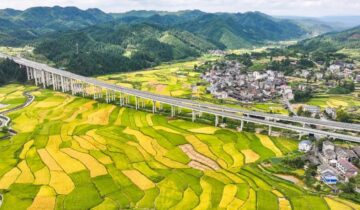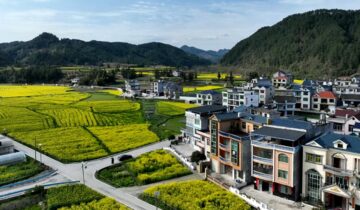
Majiang County, Guizhou Province

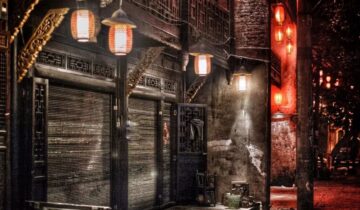
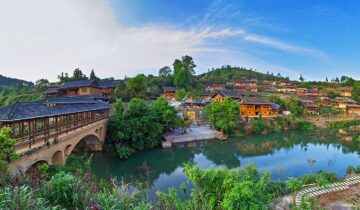
Majiang County in southeastern Qiandongnan Prefecture is the birthplace of Xia Tonghe, one of only two top scholars (zhuangyuan) in the imperial examination system to come from Yunnan or Guizhou — and the only one who later studied abroad. Xia earned the top jinshi rank in 1898, was appointed to the Hanlin Academy, went to Japan to study law, and wrote the first Chinese textbook on administrative law. His former residence in Majiang is now the centerpiece of the Tonghe…
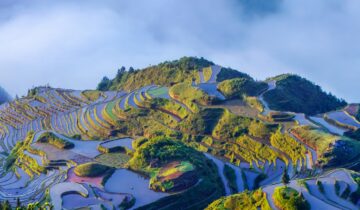
Leishan County, Guizhou Province

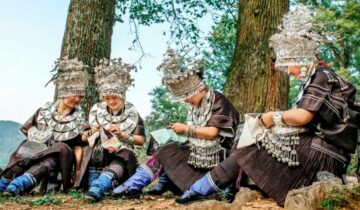
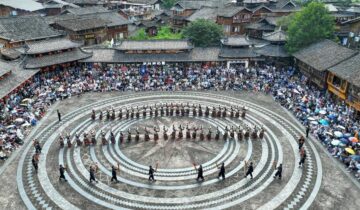
Leishan County is the Miao cultural capital of China — a title earned by weight of numbers. Fifteen national intangible heritage items. Sixty-eight national traditional villages. Fifty-nine minority-character villages. Three hundred fifty Miao settlements across 1,204 square kilometers in southeastern Qiandongnan Prefecture. No other county in China holds more national heritage items or a higher density of traditional villages. The Miao share of the population is 84.56 percent, making Leishan one of the most concentrated Miao counties in the country.…

Congjiang County, Guizhou Province

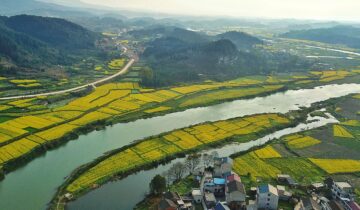
Congjiang County spreads across 3,244 square kilometers in southeastern Qiandongnan Prefecture, where Guizhou meets Guangxi. The Duliu River cuts through the center, carving a valley flanked by mountains that rise to 1,670 meters at Yuanjie Peak and drop to just 145 meters at the river’s exit — the lowest point in all of Guizhou. The vertical range gives Congjiang rare biodiversity, but the county’s real distinction lies in its ethnic density: 95 percent of its 401,000 residents belong to Miao,…

Rongjiang County, Guizhou Province

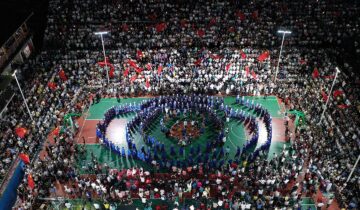
From June to November every year, Rongjiang County in southeastern Guizhou turns into something close to a carnival. That is when Village Super League (Cun Chao) — known nationally simply as “Cun Chao” — takes over the county football pitch. Local village teams compete in a tournament the county calls the Village Super League, In 2023, President Xi Jinping praised the phenomenon in his New Year address. By 2024, Rongjiang had hosted 9.46 million visitors, generating 10.8 billion yuan in…

Liping County, Guizhou Province

Liping County occupies 4,441 square kilometers at the junction of Guizhou, Hunan, and Guangxi — the largest county by land area in Qiandongnan Prefecture. Thirteen ethnic groups live within its borders. The county’s long history as a prefecture seat has produced an unusual cultural density: a Ming-era flagstone street, a UNESCO-recognized choral tradition, and the largest Dong village in China all coexist within a single jurisdiction. The name Liping dates from the Yuan dynasty — the Shang Liping Chiefdom was…

Taijiang County, Guizhou Province

Taijiang County packs a lot into 1,108 square kilometers. It has the highest concentration of Miao population in any county-level unit in China — 98 percent of its 173,800 residents are Miao — and it holds 14 national intangible heritage items, 45 national-level traditional villages, and a UNESCO citation. In 2007, the United Nations listed Taijiang as one of the world’s top ten “return to nature” cultural tourism destinations. The county administers 4 towns, 3 townships, and 2 subdistricts. Taijiang…

Jianhe County, Guizhou Province

Jianhe County lies in the middle of Qiandongnan Prefecture, a wedge of land between the Leigong Mountains and the hills of Hunan. The county was one of the last in Guizhou to be formally established — the Qing court created it in 1729, during the Yongzheng reign, as part of the campaign to bring the Miao territories under direct administration. Before that, the area was known as “raw Miao land.” Jianhe covers 2,180 square kilometers with a population of 280,000,…

Jinping County, Guizhou Province

The name Jinping means “brocade screen” — a reference to the green hills that frame the county seat. It is an apt description. Three rivers converge in Jinping — the Qingshui River, the Xiao River, and the Liang River — and the surrounding mountains rise in layered shades of green. The forest cover is 73.33 percent, the second-highest figure among the counties of Qiandongnan. The air carries more than 26,000 negative oxygen ions per cubic centimeter year-round. Jinping was built…

Tianzhu County, Guizhou Province

Tianzhu County takes its name from a stone pillar that once stood outside the county seat — “Heaven Pillar” — a natural monolith that has become the county’s defining landmark. In the heart of eastern Qiandongnan Prefecture, Tianzhu covers 2,201 square kilometers — one of the larger counties in the prefecture by land area — with a total population of 418,000. The ethnic minority share is 98 percent — overwhelmingly Miao and Dong — one of the highest concentrations in…

Cengong County, Guizhou Province

Cengong County calls itself the “first civilized place in Guizhou.” The claim rests on the old name — Sizhou — which appears in Tang records and later became the Sizhou Prefecture under the Ming. Established as an administrative entity more than 1,400 years ago, Cengong was a channel through which central Chinese political, economic, and cultural practices first entered Guizhou. The county is still known for the Sizhou inkstone, a stone carving tradition that has earned it the designation “Sizhou…

Zhenyuan County, Guizhou Province

The Wuyang River bends through Zhenyuan in a wide S-curve, splitting the old town into a shape the county calls the “natural tai chi diagram.” On the southern bank stands the Qinglong Cave complex — a Ming-dynasty temple-and-pavilion structure built into the cliff face — and on the northern bank, the checkerboard lanes of an ancient town that has held national historic city status since the 1980s. Established as a county in 202 BCE during the early Han dynasty, Zhenyuan…

Sansui County, Guizhou Province

The name Sansui — “three ears of grain” — honors a harvest story: in 1928, a single rice stalk in this corner of eastern Guizhou produced three full ears, a good omen that prompted the county’s renaming from the old Qiongshui designation. Sansui covers 1,030 square kilometers in the northeastern part of Qiandongnan Prefecture, bordering Tongren to the north and Hunan to the east. The population is 232,800 with ethnic Miao and Dong groups accounting for 69.1 percent of the…

Shibing County, Guizhou Province

Shibing County lies at the junction of three prefectures — Qiandongnan, Tongren, and Zunyi — in central-eastern Guizhou. The county’s name is taken from two local landmarks: Bashan Mountain and Bing River. It covers 1,532 square kilometers, home to Han, Miao, Dong, Buyi, Tujia, and 14 other ethnic groups. The county has the unusual distinction of being formally abolished — merged into Huangping and Jianhe in 1958 — and then restored in 1962, a resurrection that makes its modern borders…

Huangping County, Guizhou Province

Huangping County occupies the northwestern corner of Qiandongnan Miao and Dong Autonomous Prefecture, roughly halfway between the prefecture capital Kaili and the provincial capital Guiyang. Its land area covers 1,668 square kilometers with a resident population of 388,300 as of 2024. The county holds a string of unusual national titles — China Modern Folk Painting Town, China Clay Whistle Art Town, China Quality Seedless Watermelon Town, and Guizhou Longevity Town — a mix of folk craft, agriculture, and quality-of-life branding…

Kaili City, Guizhou Province

Kaili City is the capital of the Qiandongnan Miao and Dong Autonomous Prefecture, an administrative role it has held since 1956, but its urban history is younger than the counties around it. The name “Kaili” — “Kaili,” meaning a place where Miao people opened new land — became the city’s official name only in 1958, when the State Council merged the old Lushan County with neighboring districts. The city was formally established in 1984. In the decades since, Kaili has…

Close