Ceheng County, Guizhou Province

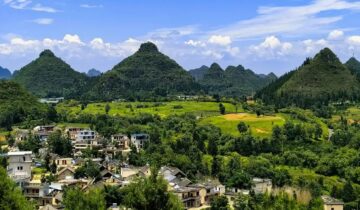
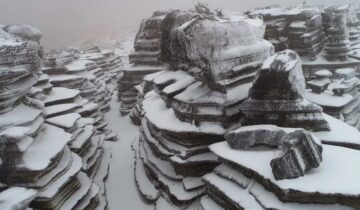
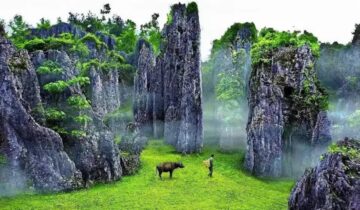
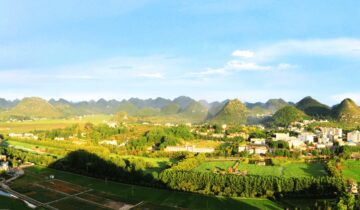
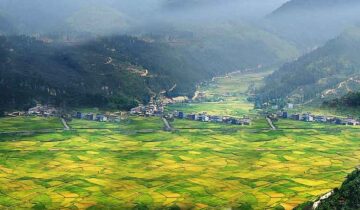
Ceheng County lies in the southern trough of Qianxinan Buyi and Miao Autonomous Prefecture, a narrow wedge of land between the Beipan River and the Guangxi border. It is one of the most Buyi-identified places in Guizhou — the county was briefly an autonomous county before the prefecture absorbed it — and its landscape of layered karst hills, terraced rice fields, and winding mountain roads has earned it the nickname “a landscape painting in southern Guizhou.” Remnants of the ancient…
Anlong County, Guizhou Province

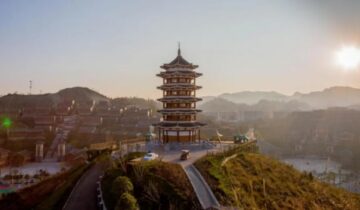
Anlong County is the only place in Guizhou that served as an imperial capital. In the 1650s, the Yongli Emperor of the Southern Ming fled to Anlong and established his court here for four years, making the county a de facto national capital — the first and only time in Guizhou’s history the province hosted a reigning emperor. The Yongli Emperor’s palace no longer stands, but the town still calls itself “Dragon City” in his honor. Anlong’s history before and…

Wangmo County, Guizhou Province

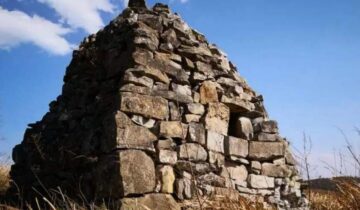
Wangmo County lies at the southern tip of Guizhou’s Qianxinan Prefecture, where the Beipan and Hongshui rivers join to form the main channel of the Pearl River. The county’s name comes from a phonetic rendering of “Wangmu” — the Queen Mother of the West in Chinese mythology — a reference to a local hill that supposedly resembles the goddess. The name is an outlier in Guizhou, where most county names draw from geography or history rather than myth. Wangmo was…

Zhenfeng County, Guizhou Province

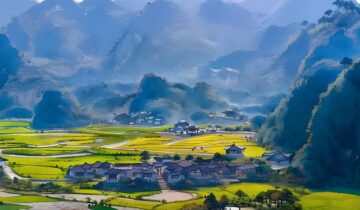
Zhenfeng County is named for an imperial compliment. In the Qing dynasty, the Jiaqing Emperor praised the area with the phrase “loyal and abundant” (zhongzhen fengmao), and the Yongfeng Prefecture was renamed Zhenfeng in his honor. The name has stuck for over two centuries, and the county has collected a handful of memorable titles since: “China Gold County,” “China Broomcorn Millet Town,” “China Pepper Town,” and the “Karst Park County.” But the landscape itself is the real draw. The Twin…

Qinglong County, Guizhou Province

Qinglong County, in northeastern Qianxinan prefecture, makes its claim to global recognition with the Twenty-Four Turns (24 Daoguai) — a stretch of mountain road carved into the side of a cliff that rises 300 meters in 24 switchbacks. Built in the 1930s, it was the only route connecting Yunnan to the coast during World War II, and it appears in photographs of wartime supply convoys that have become some of the most recognizable images of the Burma Road era. The…

Pu’an County, Guizhou Province

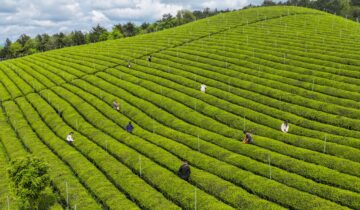
In 1980, a fossil hunter discovered a single seed in the clay of Yuntou Mountain at the border of Pu’an and Qinglong counties. It was the world’s only known fossil of a four-ball tea seed (Camellia tetracocca), dated to 1.64 million years. The seed is held today at the Guizhou Institute of Geology, and it has made Pu’an — a modest county of 1,453 square kilometers and 359,000 people in northern Qianxinan — the scientific ground zero of tea evolution.…

Xingren City, Guizhou Province

In 2018, Xingren became the last county in Qianxinan Prefecture to shed its official poverty designation — and the first to do so. The same year, the State Council approved its upgrade from county to city, making it the prefecture’s second city after Xingyi. The twin milestones capture the trajectory of a place that has ridden coal, coix seed, and a temperate climate from the bottom of the development ladder to become a “China Longevity Town.” Xingren covers 1,778 square…

Xingyi City, Guizhou Province

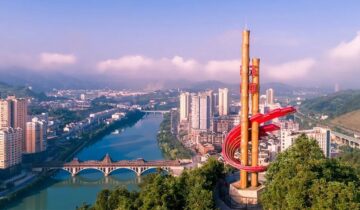
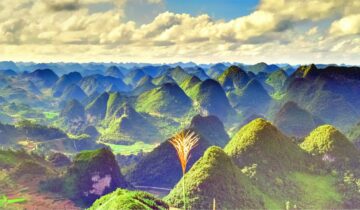
The Xingyi skyline rises against the Wanfenglin peaks — thousands of conical karst hills that step back in layers of gray-green until they dissolve into mist. The view is so distinctive that the city calls itself “a city in the forest, a forest in the city,” and it is not a metaphor. Xingyi is the capital of the Qianxinan Buyi and Miao Autonomous Prefecture, the largest city in southwestern Guizhou, and a place where the Triassic fossil beds, the Buyi…

Songtao Miao Autonomous County, Guizhou Province

In 1956, the State Council approved the creation of Songtao Miao Autonomous County — one of only five such Miao autonomous counties in the country. A quarter-century later, geologists confirmed that beneath Songtao’s hills lay the largest manganese deposit in Asia: 732 million tons proven, with a projected 1 billion tons, accounting for a quarter of China’s total reserves. The county has since been called the “Manganese Capital.” But Songtao’s identity is far from singular. It is the eastern gateway…

Yanhe Tujia Autonomous County, Guizhou Province

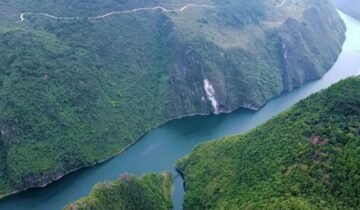
The Wujiang River enters Yanhe County from the south and flows 132 kilometers north before crossing into Chongqing, carving a gorge so dramatic that the provincial government has designated the entire stretch a National Scenic Area. On the cliffs above, a different kind of rarity lives: the Francois’ langur (black-leaf monkey), a primate with a black coat and a white cheek patch that survives in larger numbers here than anywhere else on earth. The Mayanghe National Nature Reserve, which protects…

Dejiang County, Guizhou Province

The Nuo drama of Dejiang County is one of the few surviving forms of ritual theater from ancient China. Performers wear carved wooden masks painted in red, black, and gold; they dance, chant, and leap through fire in ceremonies that can last three days. The art has been called “the living fossil of Chinese drama” by the playwright Cao Yu, and it has been inscribed on the national intangible cultural heritage list alongside Dejiang’s other distinctive tradition: the Zhalong, or…

Yinjiang Tujia and Miao Autonomous County, Guizhou Province

Yinjiang County lies on the western flank of Fanjingshan, the UNESCO World Heritage peak that dominates the skyline of northeastern Guizhou. The mountain’s shadow defines the county’s climate, its ecology, and increasingly its economy. Yinjiang is small — 1,969 square kilometers with a permanent population of 278,100 (registered population 439,800) — but it has carved out an identity distinct from its UNESCO-listed neighbor. The official website calls it “Home of Famous Tea, Home of Calligraphy, Home of Longevity.” All three…

Sinan County, Guizhou Province

Sinan has been called the “First Prefecture of Central Guizhou” and the “Pearl of the Wujiang.” The first claim dates to the Ming dynasty, when the court established Sinan Prefecture in 1413 — the same year Guizhou became a province. The second refers to the river that made the city rich. The Wujiang, Guizhou’s largest waterway, flows through the center of Sinan on its way to the Yangtze, carrying boats loaded with timber, tea, and mercury for centuries. By the…

Shiqian County, Guizhou Province

In 1413, when the Ming court carved Guizhou out of the neighboring provinces and made it the 13th province of the empire, one of the first prefectures created was called Shiqian. The name survives today on a county in southwestern Tongren that still carries the memory of its Ming foundations — a walled seat, a stone-walled landscape, and a thermal spring that has been drawing bathers for centuries. But Shiqian’s claim to antiquity goes deeper. In 219 BCE, the First…

Yuping Dong Autonomous County, Guizhou Province

In 1915, a slender bamboo flute traveled from a small town in eastern Guizhou across the Pacific to San Francisco’s Panama-Pacific International Exposition and won a gold medal. The instrument was the Yuping xiao — a vertical bamboo flute made by Dong musicians in what was then Yuping County. Along with Maotai liquor and Dafang lacquerware, it was ranked among the “Three Treasures of Guizhou,” and its craft was inscribed on the first national intangible cultural heritage list. The county…

Close