Rushan City, Shandong Province
A Weihai coastal city known for its 21.7-kilometer Silver Beach, northern China’s most productive oyster beds, Quanzhen Taoist heritage, and pioneer northward tea cultivation since 1966.
A Weihai coastal city known for its 21.7-kilometer Silver Beach, northern China’s most productive oyster beds, Quanzhen Taoist heritage, and pioneer northward tea cultivation since 1966.
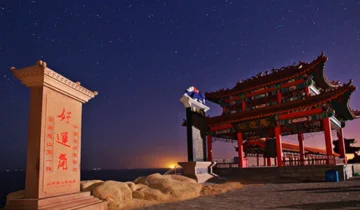
A Weihai city at the easternmost tip of the Shandong Peninsula, where the first sunlight hits China’s mainland coast, the fishing fleet leads the nation for 44 years, and the ancient sunrise drew Qin Shihuang twice.
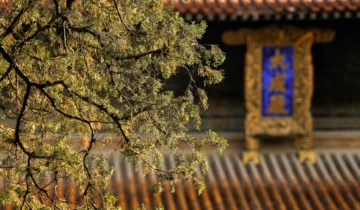
A Tai’an county between Mount Tai and Qufu where a Ming-dynasty cypress, a Yuan-dynasty temple with a structural oddity (“second beam not on main beam”), China’s toughest north-of-the-Yangtze fighting crickets, and a unique three-rod puppet tradition share the same soil.
A Jining city where 13 national heritage sites cluster around the tomb, temple, and residence of Confucius, and the cultural museum that displays the possessions of a millennia-old tradition.
Dawn drums across a marsh where Water Margin was born, China’s largest truck-body cluster, and the county where Mao Zedong once walked the riverbank.
A Weifang city that was one of ancient China’s nine provinces, where a county-level museum holds 400 Buddha statues from five centuries, the only surviving Ming imperial exam essay, and sixty thousand other artifacts.
A county in central Shandong where 18-million-year-old Shanwang fossils, the sacred mountain Yishan (foremost of the Five Guardian Mountains), a thousand-year calligraphy tradition, and China’s largest aluminum profile industry all sit on the same hills.
A Yantai city where 2.1 million tons of apples are harvested each year, the largest surviving feudal manor in China shares a lakeshore with an 800-year-old Daoist temple, and the Daoist sage Qiu Chuji once traveled to Central Asia to meet Genghis Khan.
Roses on every balcony each May, the nation’s richest gold reserves at county level, and a stone that paved Tiananmen Square.
Zheng Banqiao once journeyed here for the pears and found pear-wood smoked chicken instead. Four centuries of that pear, plus thirty thousand dinosaur eggs.
A Yantai city on the Bohai coast where a Qing merchant’s 243-room mansion, 11 listed companies, China’s only coastal coal mine, and Asia’s largest bronze Buddha share the same soil.
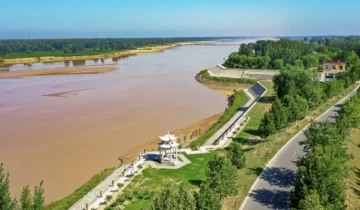
A county shaped by salt for 2,700 years and by the Yellow River’s ten shifting courses, where the first liberation trumpet in Shandong sounded on August 18, 1944.
The Ming Great Wall runs 46 kilometers through Tianzhen County’s northern wedge — a strip of land where Shanxi, Hebei, and Inner Mongolia meet. Li’erkou, a mountain pass where the wall climbs steep ridges, has been rated a national 4A scenic area and designated one of the first national key Great Wall sections. At Xinpingbao, a fortress town where the wall route is preserved through Ming-era gates and streets, the settlement has been named a China Historical-Cultural Town. Three villages…
The 1978 discovery of China’s oldest jointed puppet, ancient Laiyi music, and a constellation of living folk arts on the Jiaodong Peninsula.
Qingdao’s largest county-level city where Han-era cliff calligraphy, a Warring States fire-ox formation, a global eyelash hub, a celebrated Northern Wei stele, and an improved Yangjiabu woodblock tradition share 3,176 square kilometers.