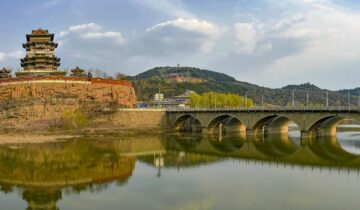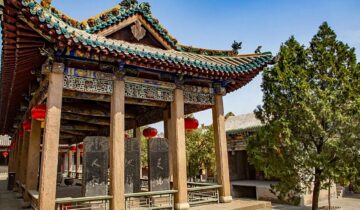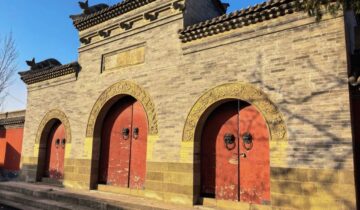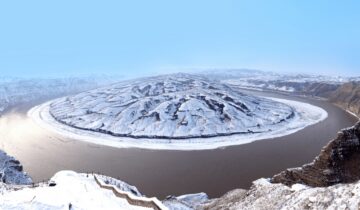
Shilou County, Shanxi Province

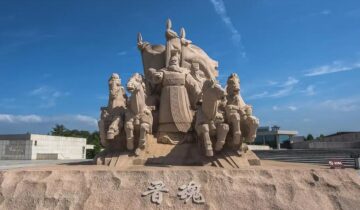
The Qing emperor Kangxi made his way west through Shanxi when he reached a county called Shilou. Something about the name struck him — “Stone Tower.” He asked where it came from. The story goes back to 598 CE: Emperor Wen of Sui had passed the mountain called Tongtian and seen rock faces stacked like a building — shi die ru lou. The name stuck. Shilou County — 1,734 square kilometers, 122,000 people — sits on the western slope of…
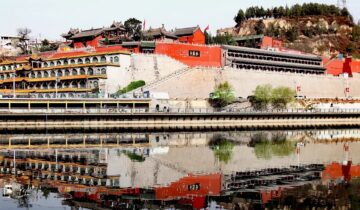
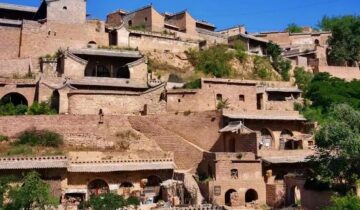
Liulin County, Shanxi Province

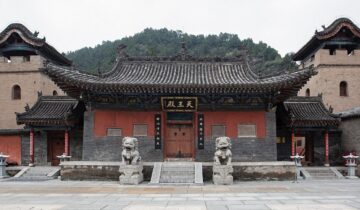
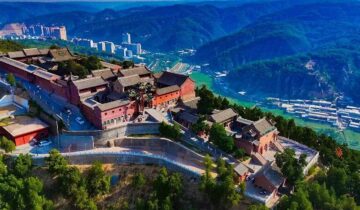
The Yellow River bends hard at Liulin. The county sits on its east bank, at the base of the Lüliang Mountains, marking the western gate of Shanxi. On a hill at the northeastern edge of town, the Xiangyan Temple has stood since the Tang dynasty — its Main Buddha Hall built during the Jin dynasty, seven of its halls built in the Yuan, and its eastern hall dating to the Song or even Tang. It is one of the most…

Linxian County, Shanxi Province

Just as the Yellow River bends around a massive shoal in the Jin-Shaan Gorge, a town rose on the cliffs — Qikou, “the Shoal,” named for the Datong Qi, the second-largest natural barrier on the Yellow River. For 200 years between the Qianlong era and the coming of the railways, Qikou was the great commercial port on the upper Yellow River, where goods from the northwest were transferred from boats to camel caravans and pushed east. Five hundred wooden boats…

Xingxian County, Shanxi Province

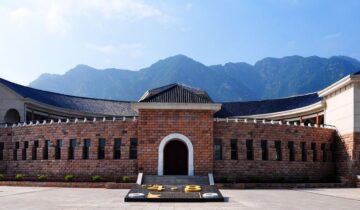
On April 8, 1946, a C-47 carrying the Communist Party’s negotiating team from Chongqing to Yan’an flew into a mountain in thick fog. All aboard died: Wang Ruofei, the Party’s Central Committee secretary; Qin Bangxian, the publisher of the Liberation Daily; Ye Ting, the former commander of the New Fourth Army; Deng Fa, the head of the Party’s labor department; and eleven others, including Ye Ting’s wife and children and the elderly educator Huang Qisheng. The mountain was Heicha Mountain,…

Jiaocheng County, Shanxi Province

The mountains are the story of Jiaocheng County. They account for 93 percent of its 1,826 square kilometers, give it the second-highest forest cover in Shanxi, and have kept the county on China’s list of Most Beautiful Counties for five consecutive years. Four national-level protected areas lie within their folds: the Pangquangou National Nature Reserve, the Wenyu River National Wetland Park, the Guandi Mountain National Forest Park, and the Jiaocheng Mountain National Forest Park. A folk song called Jiaocheng Mountain…

Wenshui County, Shanxi Province

A girl was born in 1932 in a village at the foot of the Lüliang Mountains. Her name was Liu Hulan, and at fourteen she was executed during the civil war for refusing to betray the Communist resistance. Mao Zedong, upon hearing her story, wrote the words that would become the most famous epitaph of the Chinese revolution: She lived a great life and died a glorious death. The memorial hall that bears her name — 79,000 square meters of…

Huozhou City, Shanxi Province

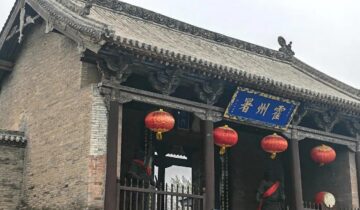
Stand before the main hall of Huozhou Prefectural Office, and you will see something that makes no architectural sense. A Yuan-dynasty beam frame — rough-hewn timber, unadorned, its columns shifted and removed to open the hall — stands behind a Ming-dynasty porch canopy so ornate and delicate that it seems to belong to a different building entirely. The great Chinese architectural historian Liang Sicheng called it a “humorously unique example” of architecture. Huozhou’s official website calls it a “single, complete…

Houma City, Shanxi Province

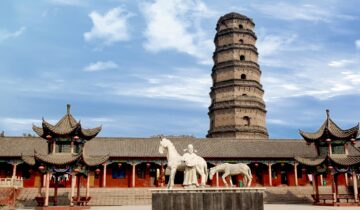
Houma City sits on a flat plain where the Fen and Hui rivers meet, a 220-square-kilometer city of 257,000 people that was once the capital of one of the most powerful states in ancient China. In 585 BCE, the Duke of Jin moved his court to this spot — called Xintian, “new field” — because the soil was deep, the water was clean, and the people were teachable. The Jin state ruled from here for 209 years through 13 generations,…

Puxian County, Shanxi Province

Puxian County — “Pu’s County” — takes its name from Pu Yizi, the teacher of the legendary Emperor Yao, who lived in seclusion in these mountains and delivered lectures on the Way. That origin alone sets it apart: few places in China can claim a name given by a philosopher who was a teacher to the legendary Yao, one of the foundational figures of Chinese civilization. Located on the western flank of the Lüliang Mountains, Puxian covers 1,510 square kilometers…

Yonghe County, Shanxi Province

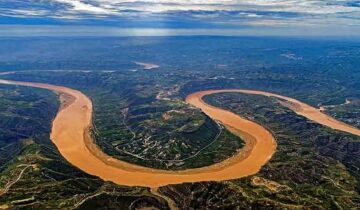
There is a bend in the Yellow River where the water stops rushing and seems to pause, coiling into a perfect omega shape around a peninsula of loess. The locals call it Qiankun Bay — the Heaven and Earth Bay — and it has appeared as a backdrop in China’s national publicity campaigns. The county that holds it is Yonghe — “Eternal Harmony” — a 65,000-person slice of the Loess Plateau on the west edge of Linfen, covering 1,212 square…

Daning County, Shanxi Province

Daning County — “Great Peace” — was established in 561 CE, during the Northern Zhou dynasty, in a narrow valley on the eastern bank of the Yellow River where the Lüliang Mountains meet the water. Part of Linfen Prefecture, it spans 967 square kilometers with a population of 52,200. The name has never changed, and the county has held it for 1,458 years, though human presence here reaches back to the Paleolithic — stone tools and habitation sites dot the…

Anze County, Shanxi Province

Anze County lies in southeastern Shanxi, where Linfen, Jincheng, and Changzhi meet, along the upper reaches of the Qin River — the second-largest tributary of the Yellow River in Shanxi, running 109 kilometers through the county from north to south. Its name combines two historical settlements: Anji in the north and Zequan in the south. The county’s 1,967 square kilometers and 75,574 residents lie at the southern edge of the Linfen region. In 2007, Anze became the first county in…

Xiangning County, Shanxi Province

Xiangning County sits on the southern tip of the Lüliang Mountains, a stretch of Shanxi where the loess plateau drops toward the Yellow River and the climate turns mild enough for vineyards. It covers 2,029 square kilometers in Linfen and is home to 206,000 people. The county’s name — “rural tranquility” — dates to 923 CE, but the settlement is older: during the Spring and Autumn period, the Marquess of Jin made his seat here, calling it Eyi, a name…

Jixian County, Shanxi Province

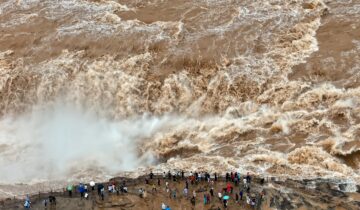
Jixian County sits where the Lüliang Mountains meet the Yellow River — a pinch point on the west of Shanxi where the river narrows from 300 meters to just 30 meters and drops 30 meters over a shelf of Triassic sandstone. The waterfall this creates — Hukou, or “kettle mouth,” the world’s largest yellow waterfall — is the county’s defining landmark. Water slams into the gorge with a roar audible from kilometers away, throwing up a column of mist that,…

Fushan County, Shanxi Province

Fushan County — “floating mountain” — takes its name from an ancient flood. Local tradition says that during the time of Emperor Yao, a great deluge covered the land, and only a single mountain rose above the waters, rising and falling with the flood. It seemed to float, and in that remarkable image the county found its name. Located on the southeastern edge of the Linfen Basin, at the foot of the Taiyue Mountains, Fushan is the source of four…

Close