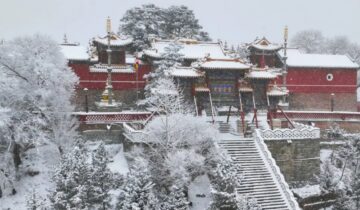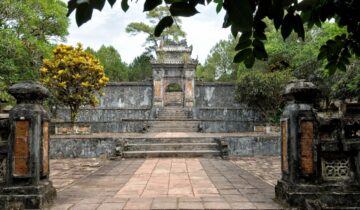
Tusi Sites: The Lost Mountain Kingdoms of China’s Tribal Chieftains

The Tusi Sites, inscribed as a UNESCO World Heritage site in 2015 across the rugged Wuling Mountains of southwest China, preserve the physical remnants of one of the most distinctive systems of governance in Chinese imperial history. Comprising three component sites — Laosicheng in Hunan, Tangya Tusi City in Hubei,…
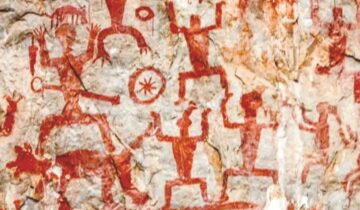

Zuojiang Huashan Rock Art: The Crimson Mysteries of China’s Ancient Cliff Paintings

Zuojiang Huashan Rock Art Cultural Landscape, inscribed as a UNESCO World Heritage site in 2016 along the winding banks of the Zuojiang River in Guangxi Zhuang Autonomous Region (22°15’N, 107°01’E), stands as one of the most enigmatic archaeological treasures in all of East Asia. Spanning 105 kilometers of towering limestone…

Silk Roads: Chang’an-Tianshan Corridor — The Ancient Highway That Connected Civilizations

The Silk Roads: the Routes Network of Chang’an-Tianshan Corridor, inscribed as a UNESCO World Heritage site in 2014, represents the first segment of the legendary Silk Road to receive World Heritage status — a transnational collaboration between China, Kazakhstan, and Kyrgyzstan. This vast corridor stretches approximately 5,000 kilometers from the…

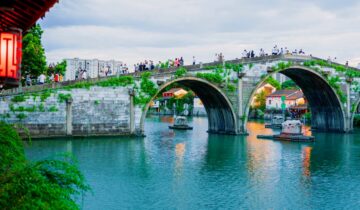
The Grand Canal: China’s 2,000-Kilometer Engineering Marvel That Shaped an Empire

The Grand Canal (大运河), inscribed as a UNESCO World Heritage site in 2014, is the longest and oldest artificial waterway on the planet — an engineering achievement that rivals the Great Wall in ambition and surpasses it in practical impact. Stretching nearly 2,000 kilometers from Beijing in the north to…

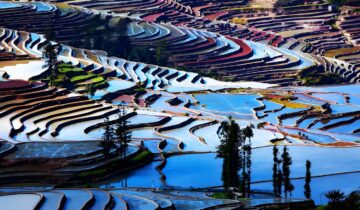
Honghe Hani Rice Terraces: Yunnan’s Thousand-Year Agricultural Masterpiece

The Honghe Hani Rice Terraces Cultural Landscape, inscribed as a UNESCO World Heritage site in 2013 in the mist-shrouded Ailao Mountains of Yunnan Province (23°05’N, 102°46’E), represents one of the most remarkable examples of human agricultural ingenuity on Earth. For over 1,300 years, the Hani people have carved terraced rice…

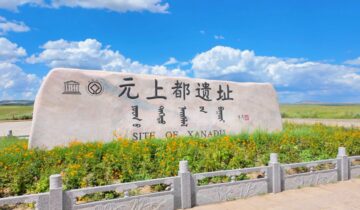
Site of Xanadu (Shangdu): The Lost Summer Capital of Kublai Khan

The Site of Xanadu (Shangdu), inscribed as a UNESCO World Heritage site in 2012 on the vast grasslands of Inner Mongolia (42°21’N, 116°10’E), holds a unique place in the global imagination. Known to the English-speaking world through Samuel Taylor Coleridge’s visionary poem “Kubla Khan” — “In Xanadu did Kubla Khan…

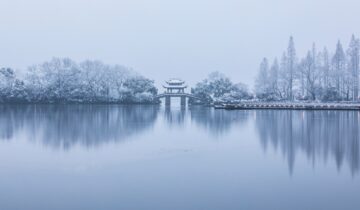
West Lake Cultural Landscape of Hangzhou: China’s Fabled Lake of Poets and Painters

The West Lake Cultural Landscape of Hangzhou, inscribed as a UNESCO World Heritage site in 2011 in the historic city of Hangzhou, Zhejiang Province (30°14’N, 120°08’E), is not merely a lake — it is a masterwork of Chinese landscape aesthetics that has inspired poets, painters, and garden designers for over…

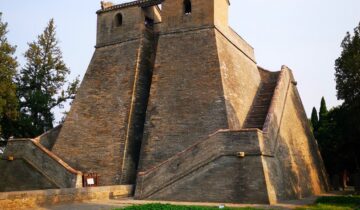
Dengfeng’s ‘Center of Heaven and Earth’: Where Confucianism, Buddhism, and Taoism Converge

The Historic Monuments of Dengfeng in “The Centre of Heaven and Earth”, inscribed as a UNESCO World Heritage site in 2010 in Henan Province (34°23’N, 113°09’E), comprise one of the most extraordinary concentrations of sacred architecture in all of China. Eight groups of buildings spanning more than 2,000 years —…

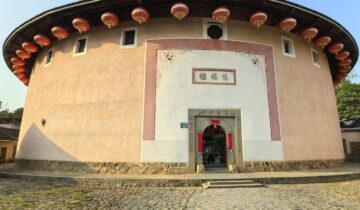
Fujian Tulou: The Giant Earthen Fortresses That Fooled CIA Satellites

The Fujian Tulou, inscribed as a UNESCO World Heritage site in 2008 across the mountainous interior of Fujian Province (24°32’N, 116°50’E), are among the most extraordinary vernacular buildings ever constructed. These massive earthen fortresses — some housing up to 800 people within a single circular structure — were built by…

Close